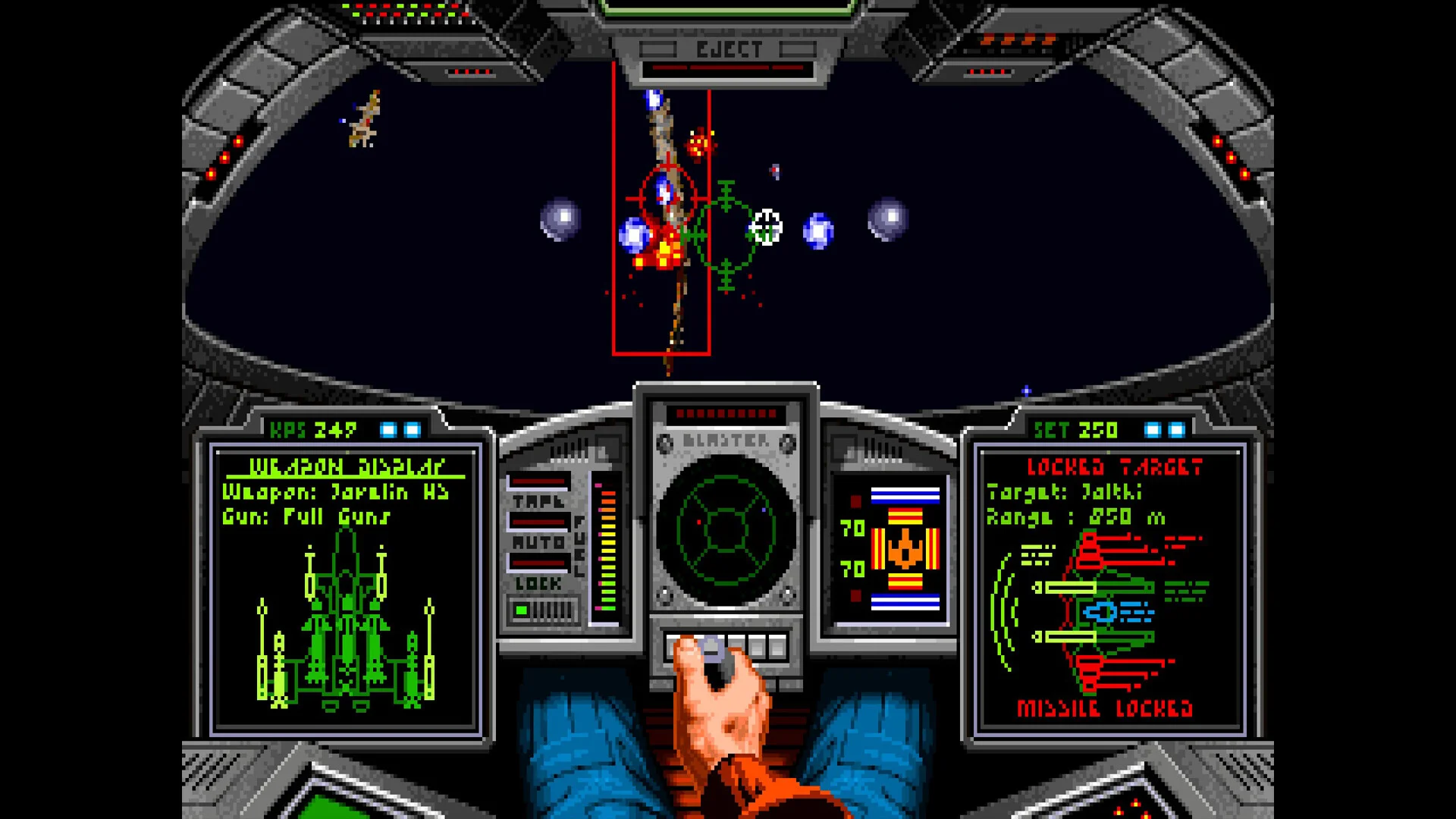
- Primary keyword: Wing Commander 35th Anniversary Edition gameplay centers on evaluating its launch presentation.
- Trailer focus: The official launch trailer establishes a dramatic, heat-driven tone.
- Best approach: Separate confirmed presentation details from mechanics that require hands-on testing.
- Gameplay check: Review controls, mission pacing, combat feedback, and accessibility before judging the edition.
Wing Commander 35th Anniversary Edition gameplay overview
Wing Commander 35th Anniversary Edition gameplay should be approached as a preservation-focused space-combat experience with a strong emphasis on presentation, atmosphere, and the identity of the original series. The available launch trailer is titled “Wing Commander: 35th Anniversary Edition Launch Trailer,” making it the most direct reference for the edition’s public presentation.
The trailer’s available audio transcript is dominated by music and the repeated word “Heat.” That narrow detail should not be treated as proof of a specific combat system, weapon mechanic, or mission rule. Instead, it indicates an intense promotional tone built around pressure, danger, and cinematic momentum.
Video Highlights:
- Launch-focused presentation for the 35th Anniversary Edition
- Heavy musical emphasis and a dramatic combat atmosphere
- Repeated “Heat” vocal cue in the available transcript
- Useful for judging tone, pacing, and visual identity
- Not a substitute for a full control or mission guide
| Evidence type | What it supports | What it does not confirm |
|---|---|---|
| Trailer title | Anniversary Edition launch presentation | Exact release features |
| Music and sound | Dramatic tone and intensity | Specific combat mechanics |
| Repeated “Heat” cue | A pressure-oriented promotional theme | A confirmed heat-management system |
| Launch format | Public-facing introduction to the edition | Full campaign structure or controls |
The launch trailer supports conclusions about tone and presentation, but it does not independently confirm every gameplay feature. Treat unshown systems as unverified until the game or official documentation demonstrates them.
Atmosphere
- High dramatic intensity
- Music-led presentation
- Strong emphasis on danger and momentum
Anniversary Identity
- Focused on the series milestone
- Presentation built for returning fans
- Useful as a first-look reference
Gameplay Verification
- Test controls directly
- Check mission pacing
- Confirm interface and accessibility options
The most reliable way to evaluate the edition is to divide observations into three groups: confirmed presentation details, visible gameplay behavior, and assumptions that still need verification. This method prevents a short promotional video from being mistaken for a complete systems guide.
How to evaluate the combat experience
A classic space-combat game succeeds when the player can understand movement, targeting, weapons, threats, and mission goals without fighting the interface. For Wing Commander 35th Anniversary Edition gameplay, start with clarity rather than speed. A dramatic trailer can create excitement, but hands-on play determines whether that energy translates into readable combat.
Use the first playable missions or introductory encounters to examine the following:
- How quickly the game communicates movement and orientation
- Whether enemy silhouettes remain readable during fast engagements
- How clearly the interface displays targets, threats, and mission status
- Whether weapon feedback feels distinct without becoming distracting
- How much time the player receives to react to incoming danger
- Whether the game rewards careful positioning instead of constant attack
| Gameplay area | Questions to ask | Strong result |
|---|---|---|
| Flight control | Can you turn, accelerate, and correct direction comfortably? | Movement feels predictable |
| Targeting | Can you identify and switch targets quickly? | Target selection supports combat decisions |
| Weapon feedback | Can you tell when an attack connects? | Hits feel clear without excessive clutter |
| Threat awareness | Are incoming dangers communicated early enough? | The player has meaningful reaction time |
| Mission flow | Are objectives easy to follow during combat? | Action and goals remain connected |
Establish the control baseline
Begin with the default control layout and learn basic movement before changing advanced settings. Test turning, acceleration, braking, and camera or view controls in a low-pressure situation. The goal is to understand how the craft responds, not to optimize immediately.
Test target management
Lock onto a single opponent, switch between available targets, and observe how the interface identifies priority threats. Note whether target information remains visible while maneuvering. A good targeting workflow should reduce confusion during multi-enemy encounters.
Compare attack feedback
Fire only when the target is clearly aligned, then compare the visual, audio, or interface response for successful and unsuccessful attacks. Distinct feedback helps you learn timing without relying on guesswork.
Review defensive options
Observe how the game communicates incoming fire, pursuit, or other danger. Practice breaking an attack pattern before attempting aggressive counterplay. Defensive awareness is especially important when a mission contains several simultaneous threats.
Adjust only after testing
Change sensitivity, bindings, display settings, or audio levels after completing a short control test. This creates a stable reference point and makes it easier to identify which adjustment improved the experience.
Change one setting at a time. When several controls are altered together, it becomes difficult to tell whether an improvement came from sensitivity, bindings, display scale, or audio balance.
The trailer’s repeated “Heat” cue can also be used as a thematic reminder: intense presentation should encourage disciplined observation, not rushed decisions. Do not assume that “heat” represents a literal resource unless the game clearly defines it. Instead, use the idea as a practical combat principle—slow down long enough to read the battlefield.
Mission pacing, survival, and replay habits
Space combat is easier to understand when each engagement has a rhythm. The most useful gameplay habit is to divide a mission into approach, engagement, recovery, and objective review. This structure helps returning players reconnect with a classic campaign and gives newcomers a repeatable way to learn without relying on guesswork.
| Mission phase | Primary goal | Recommended habit |
|---|---|---|
| Approach | Understand the immediate situation | Identify objectives before committing |
| Engagement | Control the fight | Prioritize readable threats over random targets |
| Recovery | Rebuild awareness | Recheck position, status, and remaining goals |
| Objective review | Confirm progress | Verify the mission state before moving on |
| Debrief or restart | Learn from the result | Record one mistake and one successful decision |
Read First
Review the mission objective before chasing enemies. Completion conditions matter more than individual victories.
Prioritize
Focus on the clearest immediate threat instead of spreading attention across every target.
Recover
After an engagement, restore situational awareness before starting another attack.
Reflect
On failure, identify one correctable decision rather than changing every part of your approach.
A useful replay method is to assign each attempt a single purpose:
- First attempt: learn movement and interface behavior.
- Second attempt: improve target selection.
- Third attempt: test defensive timing.
- Fourth attempt: pursue the mission objective with fewer interruptions.
- Later attempts: refine the preferred control setup.
This approach is more reliable than restarting repeatedly without recording what changed. It also protects the experience from becoming a reaction-speed test when the real challenge may be navigation, prioritization, or mission awareness.
A successful run does not require perfect execution. Focus on one improvement per replay, such as cleaner targeting, earlier threat recognition, or better objective tracking.
Gameplay Review Checklist:
- Confirm basic movement and braking feel comfortable
- Test target switching during a low-pressure encounter
- Check whether weapon feedback is easy to read
- Review mission objectives before prioritizing enemies
- Record one improvement after each replay
The anniversary context also makes comparison important. Returning fans may value authenticity, while new players may need clearer controls, readable interfaces, and adjustable presentation. Neither perspective should automatically override the other. The strongest evaluation describes what the edition preserves and how comfortably modern players can engage with it.
Recommended setup and evaluation priorities
There is no single universal setup for every player. A returning fan may prefer a familiar control arrangement and minimal changes, while a first-time player may benefit from a more readable interface and a slower learning process. Begin with a neutral configuration, then customize based on the specific problem you encounter.
| Player profile | First priority | Useful evaluation |
|---|---|---|
| Returning fan | Familiarity | Compare movement, interface, and pacing with remembered expectations |
| New player | Clarity | Check tutorials, objective readability, and target recognition |
| Accessibility-focused player | Comfort | Review display, audio, input, and control customization |
| Challenge-oriented player | Precision | Test advanced movement and efficient target management |
A good setup removes unnecessary friction without hiding important information. Preserve threat cues, objective text, and combat feedback while adjusting comfort settings around them.
Use the following order when building a personal configuration:
- Set display readability, including brightness and text visibility.
- Confirm the primary movement and attack controls.
- Place target selection where it can be reached without losing awareness.
- Balance music and effects so warnings remain audible.
- Play a short mission before making additional changes.
This order keeps the evaluation practical. If the screen is difficult to read, control testing becomes unreliable. If the controls are uncomfortable, combat pacing may feel worse than it actually is. If audio is unbalanced, important feedback can be missed.
The Wing Commander: 35th Anniversary Edition Launch Trailer is best used as a starting point for atmosphere and presentation. For detailed mechanics, rely on what the game demonstrates directly through its controls, missions, interface, and official documentation.
Recommended priority order:
- Confirm comfort before chasing performance.
- Learn one combat behavior at a time.
- Separate confirmed features from assumptions.
- Use replays to test specific improvements.
- Judge the edition by both authenticity and usability.
FAQ
Use the launch trailer to set expectations for tone, then evaluate the actual game through controls, mission clarity, combat feedback, and replayable learning goals.
Q: What does the Wing Commander 35th Anniversary Edition gameplay trailer confirm?
It confirms a launch-focused presentation with a dramatic, music-led tone. The available transcript includes repeated references to “Heat,” but it does not independently confirm a specific heat-management mechanic or detailed combat system.
Q: Is the launch trailer enough to explain the full gameplay system?
No. It is useful for understanding atmosphere, intensity, and the anniversary presentation, but a full gameplay evaluation requires direct testing of controls, targeting, mission objectives, defensive options, and interface feedback.
Q: What should new players test first?
Start with basic movement, braking, target selection, and objective tracking. Once those systems feel understandable, test weapon feedback and defensive timing before adjusting advanced settings.
Q: How should returning fans evaluate the anniversary edition?
Compare the edition across two areas: how well it preserves the expected identity of the series and how comfortably it supports modern play. Check control familiarity, interface readability, mission pacing, and accessibility options.