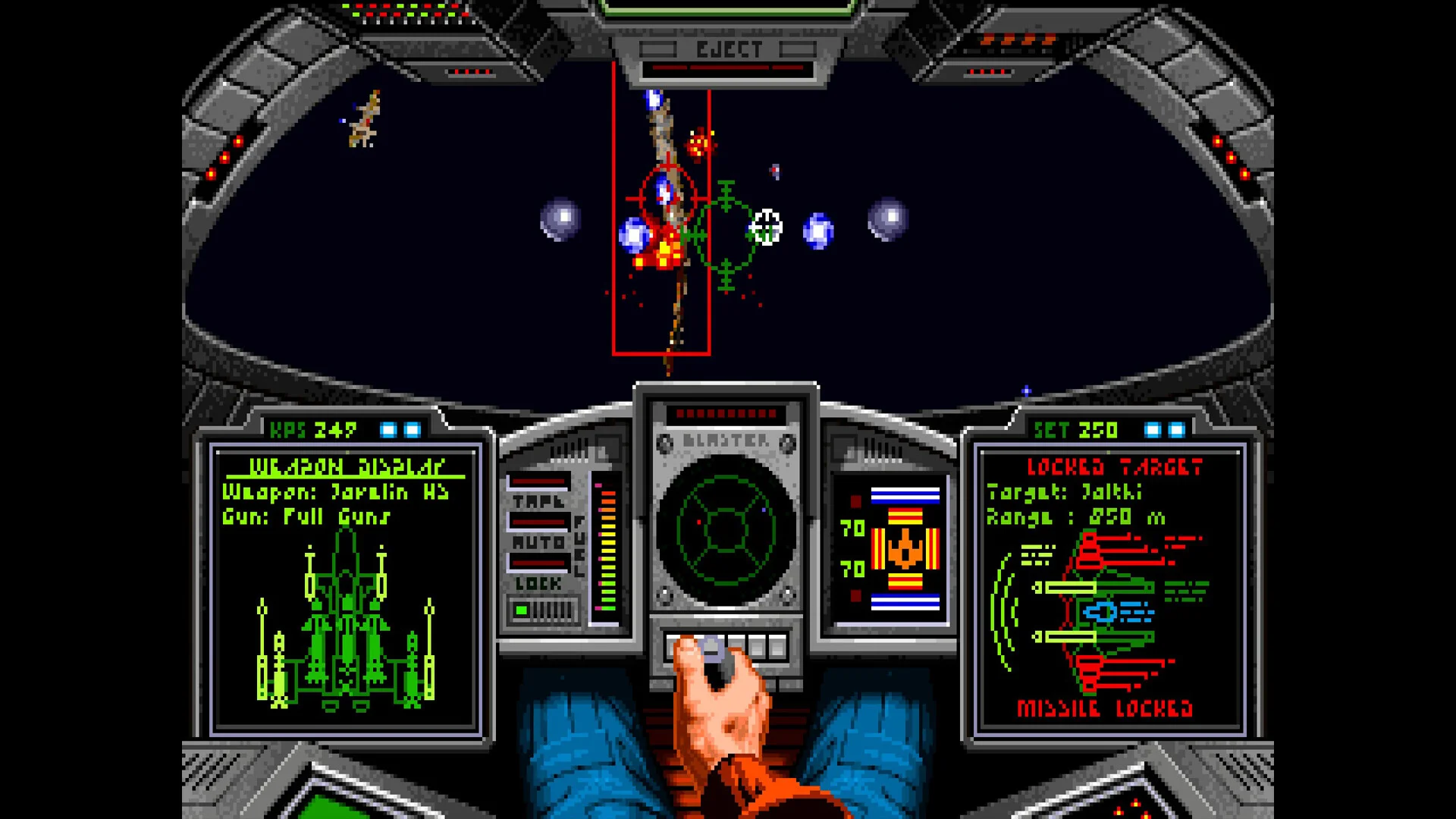
- Primary keyword: Wing Commander 35th Anniversary Edition comparison focuses on presentation, gameplay feel, and preservation.
- Best starting point: Compare the same mission, cutscene, and combat sequence under matching settings.
- Visual priority: Check clarity, cockpit readability, ship silhouettes, and interface consistency.
- Story priority: Judge whether cinematic pacing and character performances remain recognizable.
- Final verdict: Choose the version that preserves Wing Commander’s identity while improving access and comfort.
Wing Commander 35th Anniversary Edition comparison: What to Check
The best Wing Commander 35th Anniversary Edition comparison is not a simple test of sharper graphics. It should examine how the anniversary presentation protects the atmosphere, pacing, and tactical identity that define the Wing Commander experience. Use the same mission or scene whenever possible, then compare image quality, audio balance, interface readability, and combat response under equivalent conditions.
A useful comparison separates preservation from modernization. Preservation asks whether the original tone, visual language, and cinematic structure remain intact. Modernization asks whether the updated presentation makes those elements easier to see, hear, and control. These goals can support each other, but they can also pull in different directions.
| Comparison Area | Original Presentation | Anniversary Evaluation | Priority |
|---|---|---|---|
| Visual clarity | Historically styled image and effects | Cleaner image without losing contrast or atmosphere | High |
| Cockpit interface | Original gauges and targeting information | Readable at modern resolutions | High |
| Cinematic pacing | Full scene structure and transitions | Consistent timing and scene flow | High |
| Audio balance | Period sound mix | Clear dialogue, effects, and music separation | Medium |
| Controls | Legacy input expectations | Responsive mapping and comfortable modern use | High |
Preservation
- Retain the recognizable Wing Commander tone
- Protect mission structure and cinematic context
- Avoid changes that obscure the original design
Readability
- Improve cockpit and HUD visibility
- Keep ship silhouettes easy to identify
- Maintain clear visual hierarchy during combat
Comfort
- Support practical modern display settings
- Reduce unnecessary setup friction
- Make longer missions easier to follow
Compare matching scenes before judging the edition as a whole. A menu, briefing, dogfight, and cinematic sequence reveal different strengths and weaknesses.
Visual Fidelity and Interface Readability
Visual upgrades matter most when they help players understand the action. In a space-combat sequence, the important questions are whether ships remain distinct, weapons are visible without becoming distracting, and the cockpit communicates information quickly. A technically sharper image is not automatically a better image if contrast, scale, or color balance become confusing.
Start with the cockpit. Check whether target information, shield status, weapon indicators, and navigation elements remain readable during movement. Then examine external views and cinematic scenes. The anniversary presentation should ideally make details easier to notice while retaining the visual identity of the original ships, uniforms, interfaces, and environments.
| Visual Test | What to Compare | Strong Result |
|---|---|---|
| Ship silhouettes | Fighter shapes at a distance | Distinct profiles remain recognizable |
| Weapon effects | Lasers, missiles, explosions | Effects are visible but do not hide targets |
| Cockpit HUD | Gauges, targeting, warnings | Information remains readable during combat |
| Cutscene image | Faces, sets, uniforms, lighting | Details improve without changing the scene’s mood |
| Display scaling | Windowed and fullscreen presentation | Text and interface elements stay legible |
Use a fixed review routine:
- Capture the same scene at the same display resolution.
- Compare bright space backgrounds and darker combat environments.
- Inspect small interface text before judging overall sharpness.
- Check whether visual effects improve feedback or merely add screen clutter.
- Look for consistency between gameplay, briefings, menus, and cinematic sequences.
Higher resolution should not be treated as the only measure of quality. If an update reduces contrast, weakens silhouettes, or makes the cockpit harder to read, the visual result may be less effective despite looking cleaner.
Cinematics, Audio, and Story Presentation
Wing Commander’s identity is closely tied to its cinematic structure. Mission briefings, character scenes, transitions, and combat all contribute to the sense that the player is participating in a larger military campaign. A useful anniversary comparison therefore treats film presentation as a core feature rather than an optional extra.
Check whether scene transitions feel natural and whether dialogue remains easy to understand against music and effects. Watch for changes in framing, aspect ratio, subtitle placement, and playback timing. These details can affect how character motivations and mission stakes are understood, especially when a scene leads directly into a sortie.
| Story Element | Comparison Question | Why It Matters |
|---|---|---|
| Briefings | Is mission context easy to follow? | Establishes objectives and stakes |
| Dialogue | Can every speaker be understood? | Supports character and tactical clarity |
| Music | Does it support rather than overpower scenes? | Maintains tone and momentum |
| Transitions | Do scenes connect smoothly to gameplay? | Preserves campaign flow |
| Subtitles or text | Are names and objectives readable? | Helps players track information |
A strong presentation should preserve the campaign’s rhythm:
- Establish the situation.
- Explain the immediate mission objective.
- Deliver the player into combat with enough context.
- Return to the campaign structure without disruptive pauses.
- Make the outcome understandable through dialogue, text, or visual feedback.
For a broader franchise reference point, readers can consult the official Wing Commander website for series context, accessed November 8, 2026.
Do not judge cinematic quality by image resolution alone. Evaluate whether the updated presentation keeps the original relationship between briefing, mission, result, and ongoing campaign narrative.
Combat Feel and Control Responsiveness
Combat is where presentation changes become practical. A comparison should test whether the craft responds predictably, whether targeting information arrives at the right moment, and whether the control scheme supports careful positioning instead of creating unnecessary friction.
Use the same type of engagement for each test. A short encounter can reveal input delay, while a longer sortie exposes fatigue caused by awkward bindings or unclear feedback. Test turning, acceleration, weapon selection, target cycling, missile use, and landing or recovery procedures when those systems are available.
| Combat Test | What to Observe | Comparison Goal |
|---|---|---|
| Turning response | Rotation speed and control precision | Predictable maneuvering |
| Target cycling | Ease of selecting nearby enemies | Fast tactical awareness |
| Weapon selection | Clarity and input reliability | Fewer accidental changes |
| Defensive action | Timing of evasive or protective tools | Responsive survival options |
| Mission transitions | Launch, combat, and recovery flow | Consistent pacing |
Choose a Repeatable Mission
Select a mission with clear objectives, active combat, and enough duration to test controls. Use the same starting conditions for both versions.
Test Basic Flight
Check acceleration, turning, braking, targeting, and camera behavior before entering a major engagement. Note any input delay or confusing feedback.
Evaluate Tactical Feedback
Watch shields, weapons, warnings, target markers, and enemy movement. The strongest presentation makes important information visible without overwhelming the screen.
Review the Full Mission Flow
Compare launch, briefing, combat, objectives, victory or failure feedback, and recovery. Comfort is measured across the whole sortie, not one control.
The most useful result is not a universal score. Instead, record whether each version supports the way you prefer to play. A historically faithful control scheme may suit players who value authenticity, while a more flexible setup may be better for extended sessions.
A modern control option is valuable when it improves comfort without changing the tactical decisions that make Wing Commander combat distinctive.
Scoring the Anniversary Edition Fairly
A balanced verdict should use several categories rather than allowing one impressive feature to dominate the review. Score each area independently, then explain which priorities matter most to your audience. This approach is especially useful for a 35th anniversary release, where historical character and modern convenience both deserve attention.
| Category | Suggested Weight | Review Question |
|---|---|---|
| Visual readability | 25% | Is the action clearer without losing identity? |
| Cinematic presentation | 20% | Are story scenes coherent and well paced? |
| Control comfort | 25% | Does the game respond consistently on modern setups? |
| Audio clarity | 15% | Are dialogue, effects, and music balanced? |
| Preservation value | 15% | Does the release respect the original experience? |
Apply the following checklist before writing a final verdict:
Final Comparison Checklist:
- Compare the same mission or scene under matching conditions
- Check cockpit, targeting, and text readability
- Test combat controls across a complete sortie
- Review briefing, cinematic, audio, and transition quality
- Explain whether preservation or modernization is the stronger priority
A concise verdict can use one of three outcomes:
- Preservation-first: Best when the edition keeps the original tone and structure while improving access.
- Comfort-first: Best when modern controls, scaling, and readability make the experience easier to enjoy.
- Balanced update: Best when improvements are visible but do not distract from the campaign’s identity.
Do not describe an edition as better simply because it is newer. Explain what changed, who benefits, and whether those changes support the core experience.
Lead with the audience. Tell returning fans what remains familiar, then tell new players whether the anniversary presentation removes barriers without requiring them to understand the original release.
FAQ: Wing Commander Anniversary Comparisons
Q: What should a Wing Commander 35th Anniversary Edition comparison focus on first?
Start with visual readability, cockpit information, cinematic pacing, and combat controls. These areas show whether the anniversary presentation improves access while preserving the series identity.
Q: Is sharper image quality enough to make the anniversary edition better?
No. Sharper visuals help only when ships, effects, interfaces, and story scenes remain clear. Contrast, composition, audio balance, and control response should also be evaluated.
Q: How can I compare the original and anniversary presentations fairly?
Use the same mission or scene, matching display conditions whenever possible. Compare a briefing, a dogfight, a cockpit view, and a mission result instead of relying on one screenshot.
Q: Should returning fans prioritize preservation or modern comfort?
That depends on preference. Preservation protects historical tone and structure, while modern comfort improves readability, controls, and longer-session usability. A strong release can support both goals.
The fairest comparison treats the anniversary edition as both a historical celebration and a practical way to experience Wing Commander today.