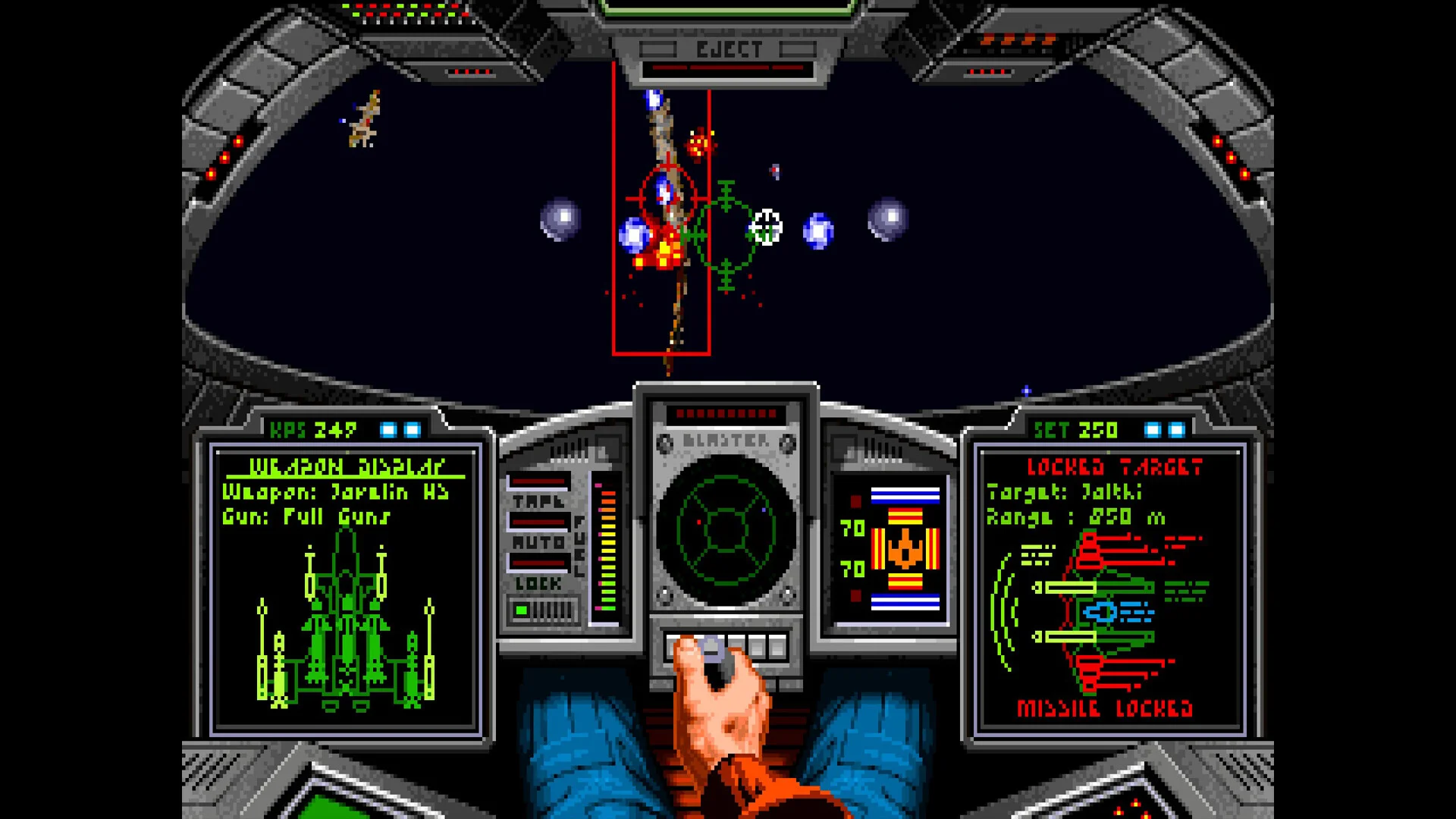
Wing Commander 35th Anniversary Edition Beginner Setup
Wing Commander 35th Anniversary Edition is best approached as a classic space-combat campaign rather than a modern action game. Spend time configuring controls, learning the cockpit, and understanding mission objectives before chasing difficult victories.
Classic Flight Model
- Expect deliberate turns and momentum
- Plan attacks before committing
- Avoid constant aggressive maneuvering
Campaign Focus
- Read mission briefings carefully
- Track objectives and wingmen
- Treat each sortie as part of a larger story
Beginner Priority
- Protect your fighter
- Maintain situational awareness
- Complete objectives before pursuing extra targets
| Setup Area | Recommended Approach | Why It Matters |
|---|---|---|
| Controls | Use a layout you can reach without looking | Faster reactions during combat |
| Targeting | Practice cycling through nearby targets | Helps identify threats and mission targets |
| View controls | Learn rear and external views early | Useful for checking pursuit and spacing |
| Audio | Keep combat cues audible | Warnings can reveal threats outside your view |
| Difficulty | Start at a manageable setting | Builds confidence without hiding core mechanics |
Do not rush into combat before confirming your weapons, shields, targeting controls, and mission objectives. A calm setup prevents avoidable failures.
Step-by-Step Mission Preparation
A successful sortie begins before launch. Use the briefing to determine what matters most, then organize your attention around the primary objective instead of treating every enemy as a mandatory target.
Read the Briefing
Identify the mission goal, destination, escort duties, and any named targets. Remember the difference between completing the objective and simply defeating enemies.
Inspect Your Loadout
Confirm your fighter, weapon arrangement, defensive systems, and available ammunition. Choose equipment that supports the mission instead of relying on one universal setup.
Set Priorities
Decide which threats must be intercepted first. Protect transports, friendly craft, or mission-critical ships before pursuing opponents that are merely convenient targets.
Review the Debriefing
Check the result after returning. Note which objective failed, which combat habit caused trouble, and what should change on the next attempt.
| Mission Element | Priority | Beginner Habit |
|---|---|---|
| Primary objective | Highest | Complete it before hunting optional enemies |
| Friendly escort | High | Stay near vulnerable allies when ordered |
| Hostile ace | Medium to high | Engage only when the mission allows it |
| Stragglers | Low | Ignore them if they pull you away from the objective |
Write down two or three key instructions before launch. This is especially useful when a mission contains several objectives or changes direction during play.
Combat Fundamentals and Target Control
Combat rewards preparation, positioning, and patience. New pilots often lose because they chase one target too long, ignore incoming attackers, or spend ammunition without creating a clear firing opportunity.
| Combat Situation | Best Response | Common Mistake |
|---|---|---|
| Target approaches head-on | Fire during a controlled pass, then break away | Staying on a collision course |
| Enemy follows behind | Check rear view, roll, and change direction | Focusing only on the forward display |
| Multiple hostiles nearby | Prioritize the closest serious threat | Switching targets constantly |
| Shields are weakening | Disengage and reposition | Continuing a low-health attack |
| Ammunition is limited | Fire only inside reliable range | Holding the trigger continuously |
Core combat habits:
- Use short, deliberate bursts instead of wasting ammunition.
- Keep the target within a useful firing angle before launching heavier weapons.
- Break away after an attack pass rather than turning blindly into a pursuing enemy.
- Watch shield and armor feedback so you know when to disengage.
- Use wingmen and allied ships as part of your tactical plan.
- Avoid tunnel vision; the next threat may be more important than your current target.
A damaged fighter is less useful than a missed kill. If your shields or armor are failing, create distance, reassess the battle, and return only when the situation is favorable.
Progression, Survival, and Campaign Habits
The campaign becomes easier when you treat survival as a long-term advantage. A mission victory is valuable, but preserving your fighter and learning from failures will make later sorties more manageable.
Before Every Sortie:
- Read the mission briefing and identify the primary objective
- Confirm targeting, weapon, view, and defensive controls
- Check that the planned loadout fits the mission
- Identify which friendly ships require protection
- Review the debriefing after the mission
Survivor
- Breaks off before critical damage
- Uses distance to reset engagements
- Values campaign consistency
Interceptor
- Reaches threats quickly
- Focuses on mission-critical targets
- Avoids unnecessary detours
Wingman
- Supports allied craft
- Watches the wider battlefield
- Engages only when the objective permits
| Habit | Short-Term Benefit | Long-Term Benefit |
|---|---|---|
| Replaying failed missions | Tests a better approach | Builds reliable mission knowledge |
| Conserving ammunition | Keeps weapons available | Improves difficult encounters |
| Staying with objectives | Reduces mission confusion | Produces steadier campaign results |
| Protecting allies | Preserves battlefield support | Makes later engagements less chaotic |
| Learning controls | Reduces input mistakes | Frees attention for tactical decisions |
Improvement comes from recognizing patterns. If a mission fails, change one factor at a time—route, target priority, weapon timing, or defensive positioning—then test the result.
Beginner Troubleshooting and FAQ
Use this section when a mission feels harder than expected. Most early problems come from unclear priorities, poor positioning, or unfamiliar controls rather than a lack of combat ability.
| Problem | Likely Cause | Practical Fix |
|---|---|---|
| You lose targets quickly | Target cycling is unfamiliar | Practice switching targets during quiet moments |
| You run out of ammunition | Firing from poor range | Wait for a stable firing opportunity |
| You miss mission objectives | Enemy chasing takes priority | Re-read the briefing and follow the objective |
| You take damage from behind | Limited battlefield awareness | Check rear view between attack passes |
| You fail repeatedly | Too many changes at once | Adjust one tactical habit per attempt |
Q: Is Wing Commander 35th Anniversary Edition suitable for beginners?
Yes, if you approach it patiently. Learn the controls, read every briefing, and focus on mission objectives before attempting difficult combat maneuvers.
Q: What should I learn first in Wing Commander 35th Anniversary Edition?
Start with targeting, weapon selection, defensive movement, and view controls. These skills matter more than advanced attack patterns during early sorties.
Q: Why do I keep failing missions after winning the dogfight?
A dogfight victory does not always complete the mission. Review the briefing and prioritize escorts, destinations, reconnaissance, or named targets over optional enemies.
Q: How can I improve without making every mission harder?
Replay one difficult sortie and change only one decision, such as target priority or disengagement timing. This makes the cause of improvement easier to identify.
Fly with a purpose, preserve your fighter, and treat every debriefing as a lesson. Consistent decisions matter more than dramatic victories.