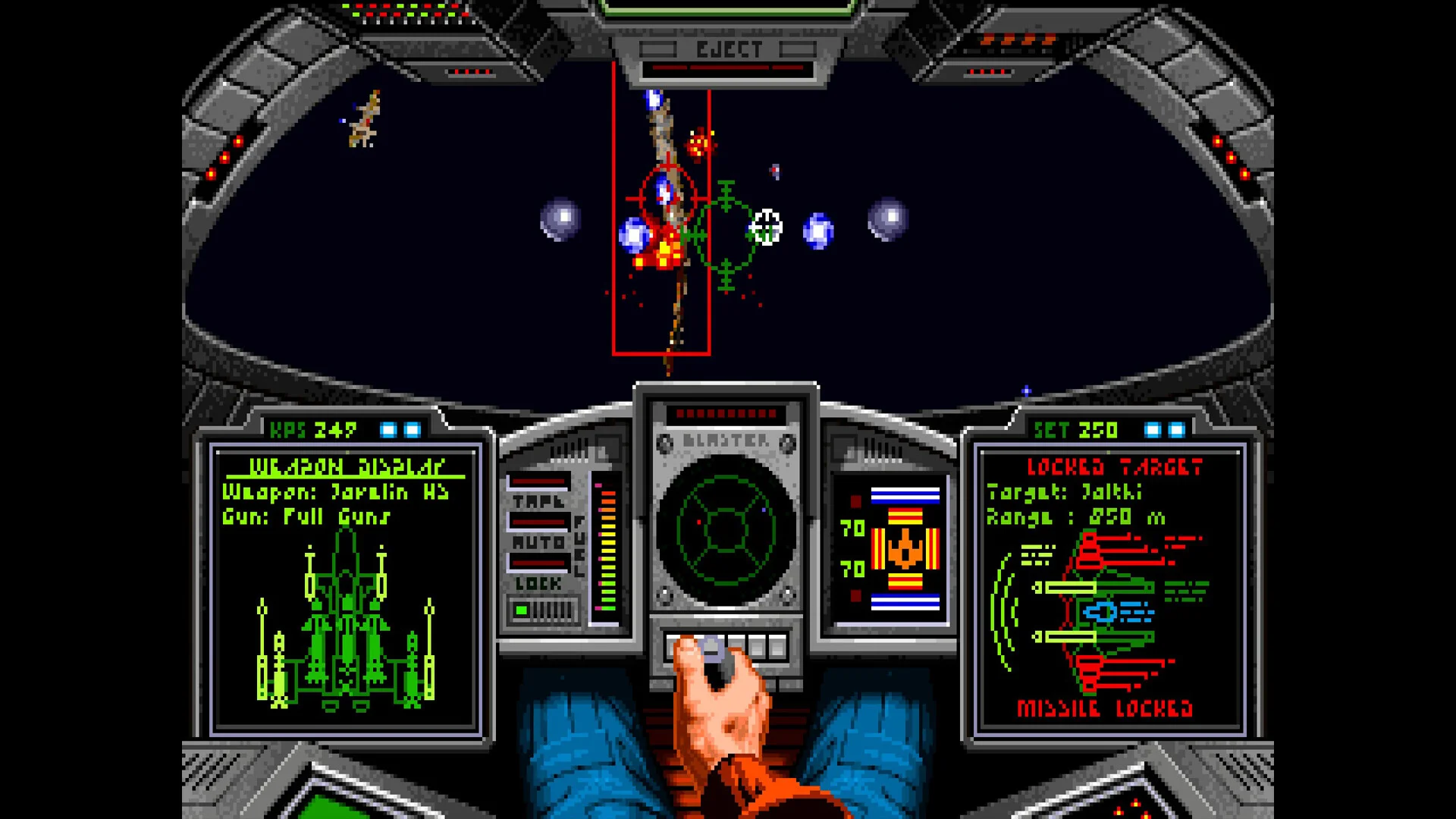
- Wing Commander 35th Anniversary Edition tips focus on control discipline, positioning, and mission awareness.
- Start with a stable control setup before attempting difficult combat encounters.
- Manage speed and turning space instead of chasing targets in a straight line.
- Protect mission objectives by prioritizing threats that can change the battle.
- Review each sortie to identify one repeatable improvement for the next attempt.
Wing Commander 35th Anniversary Edition Tips for a Strong Start
The best Wing Commander 35th Anniversary Edition tips begin before the first serious engagement. Classic space combat rewards preparation because small control mistakes can create larger problems once several ships, objectives, and attack angles compete for attention. Build a comfortable setup, learn the cockpit rhythm, and treat every early sortie as a training exercise.
The available launch trailer establishes the edition’s classic space-combat identity, but practical improvement comes from deliberate repetition. Keep the first sessions focused on movement, targeting, and situational awareness rather than trying to master every combat decision immediately.
Video Highlights:
- Classic cockpit-focused space combat presentation
- Mission-oriented combat atmosphere
- Fast visual action that rewards calm control
- A useful reference for the edition’s overall tone
Use the opening sessions to create a repeatable control routine: check your heading, confirm your target, manage distance, then commit to the attack.
Build a Reliable Control Routine
Choose controls that let you make small corrections without lifting your attention away from the action. A comfortable layout matters more than copying another player’s preferences. Keep the most important combat functions within easy reach and avoid changing several bindings between missions.
| Setup Area | Recommended Focus | Why It Matters |
|---|---|---|
| Flight controls | Smooth pitch, yaw, and roll access | Reduces overcorrection during turns |
| Targeting | Easy access to target selection and confirmation | Prevents attacks against the wrong contact |
| Weapons | Clear separation between major firing actions | Helps conserve ammunition and avoid panic inputs |
| Throttle | Fast access to speed changes | Supports approach, pursuit, and disengagement |
| View awareness | Comfortable scan or camera controls | Improves awareness of threats outside the nose |
Learn the Space Around Your Fighter
A common beginner mistake is treating the reticle as the entire battlefield. Your target may be directly ahead, but another contact can approach from the side or rear while you focus on the attack. Make short awareness checks between firing windows.
Use a simple loop:
- Confirm your current target.
- Check your relative position and speed.
- Scan for nearby threats or mission-relevant contacts.
- Reposition before committing to another attack run.
This habit creates a foundation for every later tactic. It also makes failures easier to understand because you can identify whether the problem came from aim, positioning, awareness, or target priority.
| Early Session Goal | Practice Method | Success Sign |
|---|---|---|
| Control confidence | Fly short movements without rushing | You can correct direction smoothly |
| Target awareness | Switch attention between target and surroundings | You notice threats before they reach firing range |
| Speed control | Use different approach speeds | You can close distance without overshooting |
| Attack discipline | Fire only during favorable windows | You avoid wasting long firing opportunities |
| Recovery | Break away after a poor approach | You survive mistakes instead of repeating them |
Mission Planning and Target Priority
Every sortie becomes easier when you decide what matters before the fight becomes crowded. Mission objectives should guide your target priority, but that does not mean attacking the closest contact every time. Think in terms of consequences: which enemy can damage the objective, threaten your escape, or disrupt your next move?
Do not let tunnel vision turn a successful attack into a failed mission. Recheck mission-critical contacts whenever the battlefield changes or a new threat enters the engagement.
Use a Priority Ladder
A practical priority ladder keeps decisions simple:
- Immediate objective threat: A hostile contact that can quickly interfere with the mission goal.
- High-pressure attacker: An enemy currently damaging you or forcing a bad position.
- Isolated opportunity: A target that can be attacked safely without abandoning the objective.
- Low-risk cleanup: A contact that can wait until the main situation is stable.
This order is flexible. If your fighter is already in danger, survival may temporarily move above the planned target. If the objective is under direct pressure, disengaging from a personal duel may be the correct decision.
| Situation | First Question | Preferred Response |
|---|---|---|
| Multiple contacts nearby | Which contact threatens the mission? | Mark or engage the highest-impact threat |
| Target escaping | Can pursuit expose the objective or your rear? | Break pursuit if the risk is too high |
| Heavy incoming fire | Can you safely continue the attack? | Reposition, then re-enter on better terms |
| Friendly contact under pressure | Will assistance change the battle? | Help when it supports the mission goal |
| Quiet battlefield | What information is still missing? | Scan, confirm status, and prepare the next move |
Plan the Approach, Not Just the Attack
A good attack begins before you are within firing range. Approach from an angle that gives you room to turn away, avoid overshooting, and respond to a sudden change in target direction. Straight-line pursuit can work briefly, but it often leaves you predictable.
Use wider movement when:
- The target is faster or more maneuverable.
- You are uncertain about nearby threats.
- Your approach is closing too quickly.
- You need space to recover from a missed attack.
- The mission requires continued awareness beyond the current duel.
Scout First
Gather information before committing. Confirm the target, nearby threats, and the direction of travel.
Control Distance
Use speed and turning space to decide when the engagement happens instead of reacting to every movement.
Protect Priorities
Keep mission objectives and vulnerable friendly contacts in your decision-making loop.
Disengage Cleanly
Leave a poor engagement before it becomes a larger problem. Repositioning is a tactical choice.
Step-by-Step Combat Improvement
The fastest way to improve is to isolate one skill at a time. Trying to fix aiming, movement, target selection, and awareness during one chaotic sortie makes progress difficult to measure. Instead, use a short training cycle and repeat it until the decision feels natural.
Measure improvement by better decisions, not only by mission outcomes. A failed sortie can still teach useful information when you know which choice caused the problem.
Stabilize Your Controls
Begin with a short flight focused only on movement. Practice small direction changes, speed adjustments, and controlled turns. Avoid unnecessary weapon use until the ship responds predictably.
Practice Target Confirmation
Select a contact, verify that it is the correct target, and maintain awareness of the surrounding space. Repeat this process until target changes become deliberate rather than accidental.
Create Better Attack Windows
Approach with enough distance to correct your line. Attack when the target’s movement gives you a reasonable firing opportunity, then prepare to turn away instead of staying locked into the pursuit.
Add Threat Scanning
After each attack run, scan for new pressure. Check whether another contact is approaching, whether the mission objective remains safe, and whether your current position is becoming dangerous.
Review One Mistake
After the sortie, identify one repeatable error. Examples include overshooting, ignoring a threat, switching targets too quickly, or continuing an attack after the position became unsafe.
A Simple Combat Decision Table
| Combat Moment | Avoid | Better Habit |
|---|---|---|
| Before closing distance | Rushing directly at the target | Choose an approach with turning room |
| During the firing window | Holding the attack longer than necessary | Fire, assess, and prepare the next movement |
| After a missed pass | Immediate panic reversal | Create space and set up another approach |
| Under pressure | Fixating on one target | Recheck threats and mission priorities |
| After a mistake | Repeating the same attack pattern | Change one variable and test the result |
When you can complete several engagements while maintaining target awareness and a recovery plan, begin adding more complex priority decisions.
Survivability, Positioning, and Recovery
Survival is not passive in a space-combat game. It comes from controlling how much danger you accept at once. A fighter that constantly attacks without creating space may appear aggressive, but it can lose the ability to respond when the situation changes.
Positioning should support three goals: keeping the target in a useful engagement zone, preserving an escape direction, and limiting exposure to threats outside your immediate focus.
Recover Before the Situation Collapses
When an attack goes poorly, the correct response is usually to simplify the situation. Stop trying to solve every problem at the same time. Create distance, regain awareness, and return only when the next approach is more favorable.
Useful recovery habits include:
- Breaking pursuit when the target pulls you away from the objective.
- Avoiding repeated turns that leave you in the same vulnerable position.
- Checking your surroundings after every major attack pass.
- Re-entering combat from a controlled angle.
- Treating retreat as preparation for the next attack, not as failure.
| Warning Sign | Likely Problem | Recovery Action |
|---|---|---|
| You repeatedly overshoot | Approach speed is too high | Slow earlier and begin the turn sooner |
| You lose track of the objective | Tunnel vision during a duel | Pause the pursuit and recheck mission status |
| You are attacked from behind | Awareness checks are too infrequent | Scan after every attack pass |
| You cannot create space | Movement is too predictable | Change direction and speed before re-engaging |
| You keep repeating a failed attack | No post-mistake adjustment | Alter one part of the approach and test again |
Balance Aggression With Information
Aggression works best when it is informed. Before committing to another pass, ask whether the target is isolated, whether another contact is approaching, and whether the attack improves the mission situation. If the answers are unclear, take a moment to gather information.
Combat Readiness Checklist:
- Confirm the current target before attacking
- Keep a recovery direction available
- Scan for threats after each attack pass
- Recheck the mission objective during extended pursuits
- Identify one mistake after every difficult sortie
The safest attack is usually the one that leaves you with a useful next move. Do not trade all of your maneuvering space for a single firing opportunity.
Long-Term Practice and FAQ
A reliable pilot improves by building habits that remain useful across different missions. Do not judge your progress only by completion. Track whether you are making fewer avoidable errors, recovering faster, and choosing targets with a clearer understanding of mission priorities.
For a focused practice routine, spend one session on controls, one on target awareness, and one on positioning. Keep the goal narrow enough that you can tell what changed. This approach is more productive than changing every setting or tactic after a single difficult sortie.
| Practice Focus | Session Objective | Review Question |
|---|---|---|
| Controls | Make smooth direction and speed changes | Did the ship respond as expected? |
| Targeting | Confirm contacts before committing | Did you attack the intended target? |
| Positioning | Preserve room for recovery | Could you disengage safely? |
| Awareness | Scan after each attack pass | What threat did you notice late? |
| Mission discipline | Follow objective priorities | Did the duel support the mission? |
The most useful Wing Commander 35th Anniversary Edition tips are the ones you can repeat under pressure: confirm, approach, attack, scan, and recover.
Q: What should beginners practice first in Wing Commander 35th Anniversary Edition?
Begin with control confidence and target confirmation. Practice smooth movement, comfortable speed changes, and deliberate target selection before focusing on advanced combat decisions.
Q: How can I avoid tunnel vision during combat?
Use a scan habit after every attack pass. Recheck nearby threats, mission objectives, and your escape direction before committing to another pursuit.
Q: Should I always chase a damaged target?
No. Pursuit is worthwhile only when it supports the mission and does not create unnecessary exposure. Break away when the target pulls you away from important objectives or into a dangerous position.
Q: What is the best way to improve after a failed sortie?
Identify one repeatable mistake, such as overshooting or missing a threat, then change one part of your approach during the next attempt. Focused adjustments make progress easier to measure.