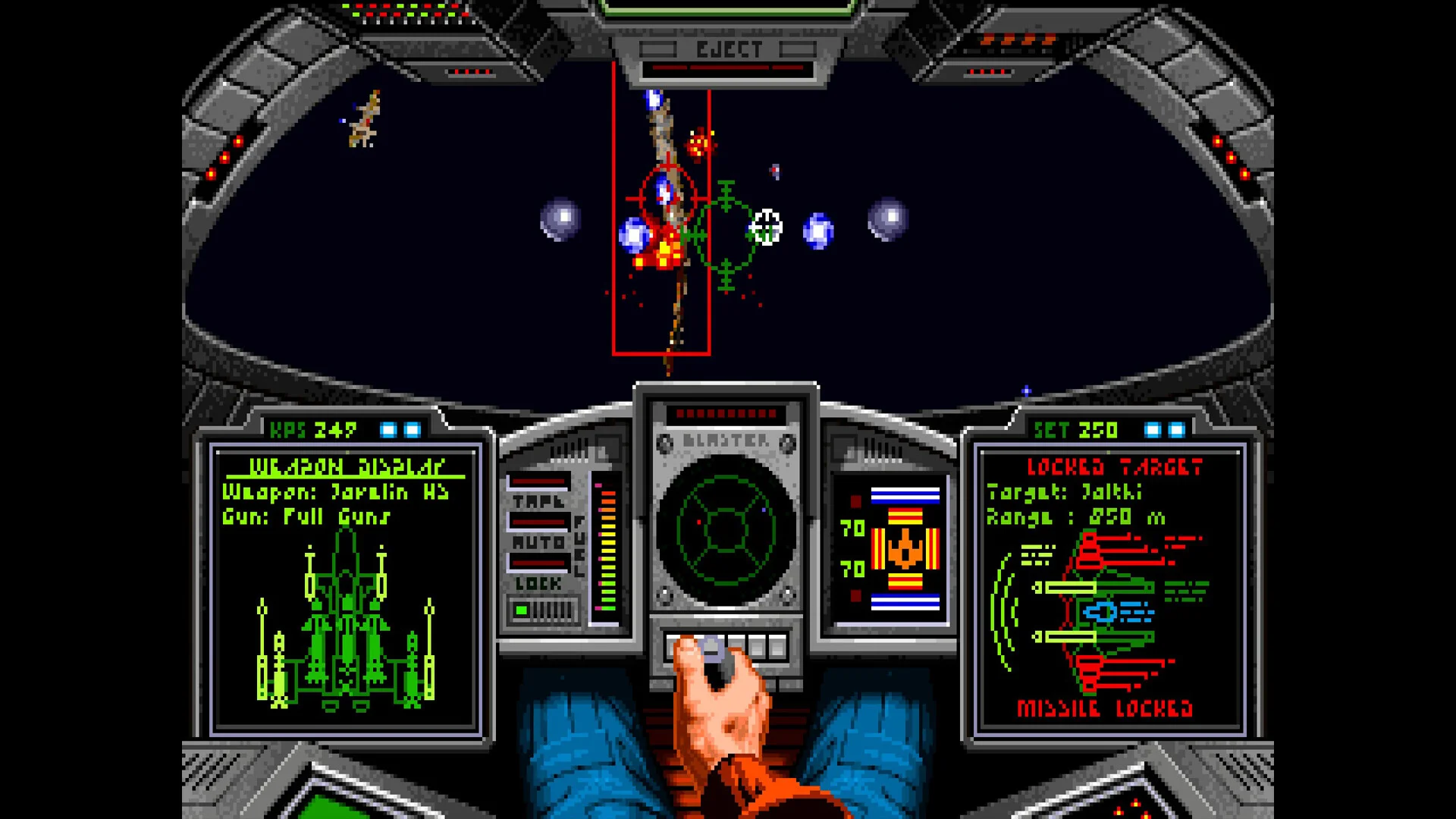
- Primary keyword: Wing Commander 35th Anniversary Edition mission guide focuses on preparation and repeatable mission habits.
- Best setup: Configure controls, cockpit visibility, subtitles, and display options before entering a campaign mission.
- Core tactic: Follow mission objectives first, then manage positioning, targets, weapons, and defensive movement.
- Replay value: Use cloud saves, optional cinematic enhancements, and controller or joystick support to refine each sortie.
- Beginner priority: Learn reliable control inputs before attempting aggressive combat or difficult objective chains.
Wing Commander 35th Anniversary Edition mission guide: Mission Setup
The best Wing Commander 35th Anniversary Edition mission guide begins before launch. The anniversary release brings together classic Wing Commander content with modern presentation and control improvements, so the first mission should be treated as a configuration test. Confirm that the game recognizes your preferred input device, adjust the cockpit view for comfortable visibility, and decide whether enhanced full-motion video is right for your display.
The edition includes optional improvements such as sharper cinematic presentation, higher frame-rate gameplay, improved controller and joystick support, widescreen cockpit configuration, subtitles, cloud saves, and additional reference materials. These features do not replace mission knowledge, but they can make long campaign sessions easier to manage.
| Setup Area | Recommended Choice | Why It Matters |
|---|---|---|
| Input device | Joystick or controller with tested bindings | Precise control is useful during turns, pursuit, and defensive movement |
| Cockpit layout | Configure widescreen view before missions | Keeps instruments and forward visibility comfortable |
| Cinematics | Enable enhanced FMVs if performance remains stable | Improves briefing and story presentation |
| Subtitles | Turn on subtitles when needed | Helps track mission dialogue and objectives |
| Saves | Use cloud saves when available | Supports progress across compatible sessions |
| Reference materials | Review manuals and player guides | Explains classic systems before combat becomes demanding |
Control First
- Test pitch, roll, throttle, and weapon inputs
- Confirm every button before a major sortie
- Keep emergency actions easy to reach
Visibility Second
- Set cockpit scaling for your monitor
- Check subtitle readability
- Avoid visual options that obscure instruments
Mission Focus Third
- Read the briefing carefully
- Identify the primary objective
- Treat optional actions as secondary priorities
Use the opening mission or a low-pressure flight to test your complete control layout. Changing bindings during a difficult objective can create avoidable mistakes.
A practical setup routine is more valuable than chasing the highest visual settings. Classic space combat often requires attention to several instruments at once, and a comfortable cockpit view helps you keep your focus on the mission rather than the interface.
Controls, Cockpit, and Presentation Options
The anniversary edition is designed to make a classic PC space-combat experience more approachable on current hardware. Improved joystick and controller support gives you more flexibility, while widescreen cockpit configuration helps adapt the original presentation to modern displays. These options should be configured around consistency rather than experimentation.
Start with a control scheme that makes ordinary flight feel predictable. You should be able to turn, accelerate, decelerate, select targets, change weapons, and respond to threats without searching for keys. If you use a joystick, keep the most frequently used combat actions close to the primary hand position. If you use a controller, prioritize camera or flight control precision over assigning too many secondary functions.
| Control Category | Test Before Mission | Warning Sign |
|---|---|---|
| Flight movement | Pitch, yaw, roll, and throttle | Aircraft responds later than expected |
| Targeting | Select, cycle, and confirm targets | You cannot identify the intended enemy |
| Weapons | Primary and secondary weapon inputs | Accidental weapon switching |
| Defensive action | Evasion or emergency controls | Defensive input is difficult to reach |
| Menus | Pause, briefing, and save navigation | Mission progress cannot be checked quickly |
Choose Your Input Method
Select the controller, keyboard, or joystick that gives you the most consistent movement. Do not judge the setup by menu comfort alone; test it during actual flight.
Verify Essential Bindings
Check flight movement, throttle, target selection, weapon controls, and defensive actions. The goal is to remove hesitation from routine combat decisions.
Adjust the Cockpit View
Configure the widescreen cockpit for clear forward visibility and readable instruments. If the display feels crowded, reduce visual clutter before starting the campaign.
Run a Short Practice Flight
Perform basic turns, acceleration changes, target cycling, and weapon selection. Make final adjustments before committing to a difficult mission.
Do not change several control settings at once after a failed mission. Adjust one category, test it, and then compare the result during the next attempt.
Optional enhanced FMVs are primarily a presentation choice, but they can also affect how you experience briefings and story transitions. Use the standard presentation if you prefer a more restrained retro feel, or enable the enhanced option when sharper cinematics improve readability and immersion on your display.
Mission Flow and Combat Priorities
A reliable sortie follows a repeatable sequence: understand the objective, establish control of your ship, identify immediate threats, and only then pursue aggressive combat. Wing Commander missions can combine navigation, escorting, interception, defense, and scripted story events. Because objectives may change during a mission, keep the original briefing in mind while watching for new instructions.
The safest approach is to separate mission success from combat enthusiasm. Destroying every hostile target may not be the same as completing the assignment. Protecting a designated craft, reaching a location, surviving an engagement, or following a flight path can be more important than chasing a damaged enemy.
| Mission Phase | Priority | Recommended Behavior |
|---|---|---|
| Briefing | Understand objectives | Note primary goals, escort duties, and destination |
| Launch | Stabilize flight | Confirm controls, formation, and immediate surroundings |
| Transit | Maintain awareness | Watch navigation cues and avoid unnecessary separation |
| Engagement | Control the fight | Select practical targets and manage positioning |
| Objective change | Reassess priorities | Follow new orders instead of continuing an old plan |
| Extraction | Preserve progress | Disengage when the mission goal is complete |
Use these combat principles during most missions:
- Protect the objective before chasing kills. A surviving escort or completed waypoint can matter more than a high score.
- Keep your ship moving. Predictable straight-line flight makes you easier to target.
- Avoid tunnel vision. Check instruments and surrounding space after every attack run.
- Choose manageable targets. Finish immediate threats before switching repeatedly between distant enemies.
- Disengage when necessary. A tactical retreat can preserve the mission when your position becomes unfavorable.
- Review the briefing after failure. Determine whether the problem was control, positioning, target priority, or objective awareness.
After every failed sortie, identify one specific cause before restarting. A focused correction is more useful than changing your entire playstyle.
The original campaign structure rewards patience. Instead of treating every encounter as a pure dogfight, use the wider mission context to decide when to attack, when to defend, and when to continue toward the next objective. This approach also makes the story easier to follow because mission actions remain connected to the briefing.
| Combat Situation | First Response | Follow-Up |
|---|---|---|
| Enemy closes quickly | Stabilize movement and identify the threat | Use controlled turns rather than frantic input |
| Escort comes under pressure | Move toward the objective area | Remove the most immediate attacker |
| You lose target awareness | Recheck instruments and target cycling | Rejoin the mission route |
| Multiple enemies appear | Separate urgent from distant threats | Avoid pursuing every contact |
| Ship position becomes unsafe | Create distance and regain control | Return only when the objective allows |
Progression, Saves, and Replay Strategy
The anniversary edition supports a more flexible replay routine through cloud saves and restored reference materials. These features are especially useful for players returning to classic space combat after a long break. Use them to maintain campaign continuity, but do not rely on saves as a substitute for learning the mission structure.
A strong replay method has three stages. First, complete the mission while prioritizing survival and objective awareness. Second, review the moments that caused trouble. Third, replay with one measurable goal, such as improving target selection, reducing unnecessary damage, or reaching an objective more efficiently.
Before Starting a Difficult Sortie:
- Read the briefing and identify the primary objective
- Confirm flight, targeting, weapon, and defensive controls
- Check cockpit visibility and subtitle readability
- Decide whether enhanced FMVs suit your display
- Create or confirm a reliable save before launching
| Replay Goal | What to Track | Useful Result |
|---|---|---|
| Improve survival | Where damage begins and which threats cause it | Better defensive positioning |
| Improve accuracy | Missed attacks and rushed target changes | More controlled engagements |
| Improve navigation | Moments when the mission route becomes unclear | Stronger briefing awareness |
| Improve objective completion | Actions taken after new orders appear | Faster response to mission changes |
| Improve comfort | Eye strain, input errors, or unclear cockpit elements | More consistent long sessions |
The release also includes additional manuals, reference cards, player guides, interviews, and related materials. Read these resources when a system feels unfamiliar instead of guessing through repeated failures. Classic interfaces often communicate important information through compact indicators, and understanding those indicators can reduce unnecessary trial and error.
Change one variable per replay whenever possible. If you alter controls, visual settings, and combat tactics simultaneously, it becomes difficult to determine which adjustment improved your result.
For longer sessions, take short breaks between missions. Story-heavy flight campaigns can combine extended dialogue, cockpit concentration, and repeated engagements. A pause between sorties gives you time to review the next objective and prevents rushed decisions from carrying into the following mission.
Mission Guide FAQ
Q: What should I configure first in Wing Commander 35th Anniversary Edition?
Start with your input device and essential bindings. Test flight movement, throttle, targeting, weapon selection, and defensive actions before adjusting presentation settings.
Q: Should I use a joystick, controller, or keyboard?
Choose the device that gives you the most consistent control. The anniversary edition supports improved controller and joystick handling, but the best option depends on your comfort and familiarity.
Q: Are enhanced FMVs necessary for mission success?
No. Enhanced FMVs are an optional presentation feature. They can improve cinematic clarity, while standard presentation may better suit players who prefer the original visual style.
Q: What is the most important combat tip for new players?
Prioritize the mission objective over unnecessary kills. Maintain awareness of escorts, destinations, and updated orders before committing to a long pursuit.
Treat each mission as a sequence of decisions rather than a single dogfight. Good preparation, stable controls, objective awareness, and measured replays provide the strongest foundation for the campaign.
The most effective Wing Commander 35th Anniversary Edition mission guide strategy is simple: configure carefully, read the briefing, protect the objective, and improve one mistake at a time. With the anniversary features set to match your display and controls, the classic campaign becomes easier to approach without losing its tactical character.