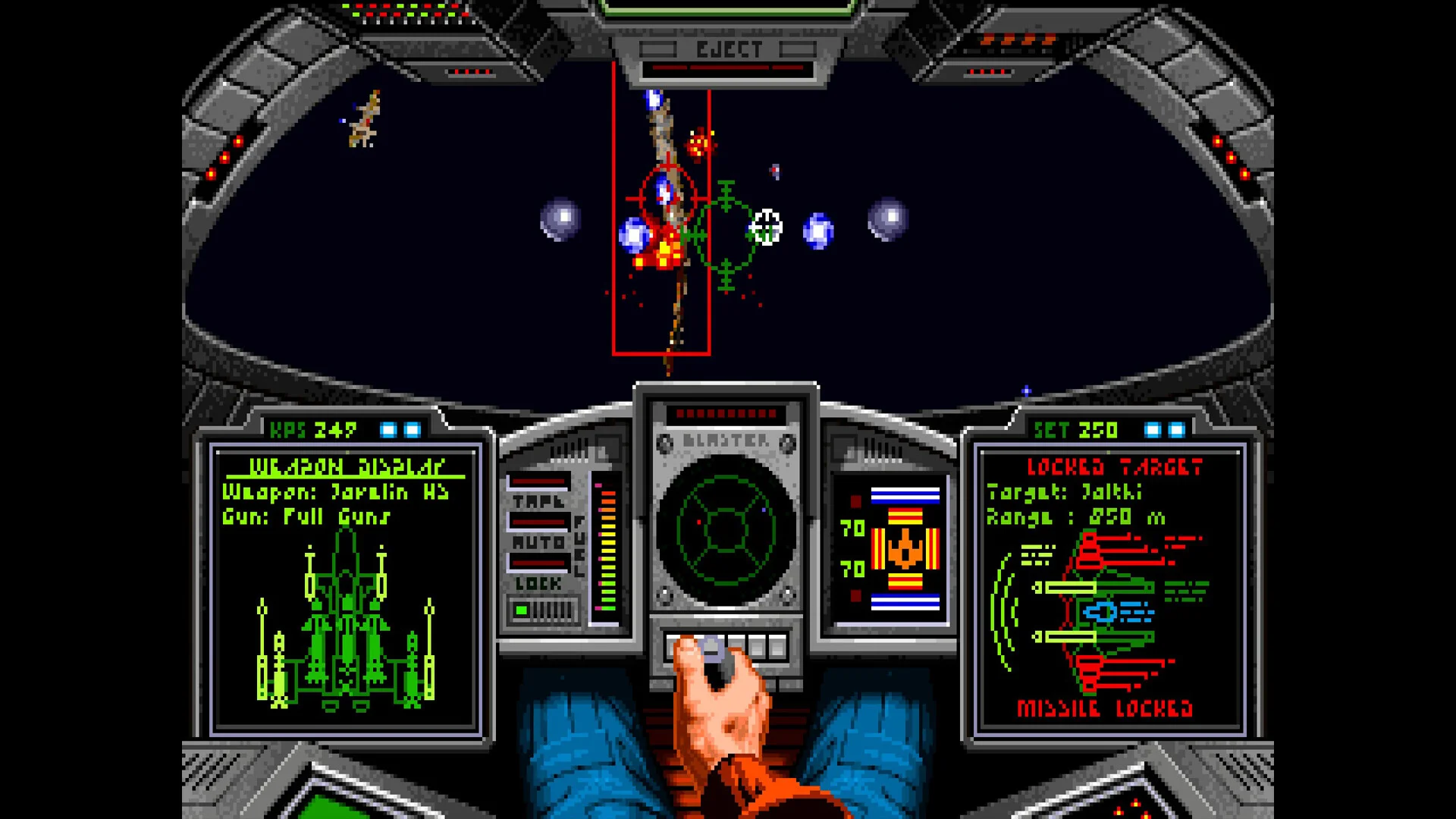
- Primary keyword: Wing Commander 35th Anniversary Edition restored FMV cutscenes are the focus of this guide
- Best approach: Compare restored footage with the original presentation before choosing a permanent setting
- Display tip: Use integer-friendly scaling, balanced brightness, and restrained sharpening
- Preservation goal: Keep the original visual option available for historically accurate playthroughs
- Troubleshooting: Test playback, audio sync, subtitles, and transitions before starting a campaign
Wing Commander 35th Anniversary Edition restored FMV cutscenes
The Wing Commander series is closely associated with cinematic storytelling. Its briefings, character scenes, combat transitions, and dramatic mission outcomes helped define the identity of the franchise. For that reason, Wing Commander 35th Anniversary Edition restored FMV cutscenes are more than a cosmetic upgrade. They can change how the story feels on a modern display while preserving the role that filmed sequences played in the original experience.
Restored full-motion video, or FMV, should be judged on more than sharpness. A good presentation keeps faces readable, motion stable, colors natural, and dialogue synchronized with the soundtrack. It should also respect the original framing instead of stretching scenes until actors appear unnaturally wide or narrow.
The most useful way to approach the edition is as a presentation choice rather than a simple “new is always better” toggle. Modern footage can make cinematic scenes easier to watch, but the original version may better reflect the visual limitations and atmosphere of the period.
| FMV presentation | Main strength | Best use |
|---|---|---|
| Restored footage | Cleaner image and improved readability | First playthroughs and modern displays |
| Original footage | Historical texture and period-authentic softness | Preservation-focused playthroughs |
| Balanced scaling | Better proportions and reduced distortion | Most widescreen monitors |
| CRT-style presentation | Adds softness and scanline character | Retro-focused sessions |
Treat restored footage as an alternate presentation layer. Keep the original option available so you can switch between clarity and historical character without changing the underlying campaign.
What restoration should improve
A restoration is most valuable when it addresses the limitations of older video formats without erasing the visual language of the original production. Look for these improvements:
- Cleaner edges around actors, ships, and set pieces
- More stable motion during camera pans and scene transitions
- Better readability in dark briefing rooms and cockpit interiors
- Reduced compression noise in backgrounds and facial close-ups
- More consistent playback across modern displays
- Preserved aspect ratio and original scene composition
The best results should still look like period FMV, not like newly filmed material. Excessive sharpening can create halos around actors, while aggressive noise reduction may remove fabric texture, hair detail, or background depth.
Recommended display and playback setup
Modern monitors introduce several variables that did not exist on older computer displays. Resolution, refresh rate, scaling behavior, aspect ratio, HDR processing, and post-processing can all affect how restored cutscenes appear.
Start with a neutral setup. Disable unnecessary display enhancements before judging the footage. Television modes such as vivid color, motion interpolation, and artificial contrast can make FMV appear overly bright or unnaturally smooth.
| Setting | Recommended starting point | Why it matters |
|---|---|---|
| Aspect ratio | Preserve original proportions | Prevents stretched faces and scenery |
| Scaling | Integer or clean full-screen scaling | Reduces uneven pixels and soft borders |
| Sharpening | Low or disabled | Avoids halos around high-contrast edges |
| Motion smoothing | Disabled | Preserves the intended cinematic cadence |
| HDR | Test carefully | Can crush shadows or exaggerate highlights |
| Audio output | Stereo or stable surround profile | Helps maintain dialogue clarity and sync |
A practical setup sequence
Reset display enhancements
Begin with a neutral monitor or television profile. Turn off motion interpolation, excessive sharpening, dynamic contrast, and vivid color modes. These features can make restored footage look less authentic.
Confirm the aspect ratio
Check that cockpit windows, character faces, and circular interface elements retain their intended proportions. If the image appears stretched, select a different scaling mode before changing other settings.
Test brightness and contrast
Use a dark cinematic scene and a bright exterior scene to set a middle ground. Preserve shadow detail without making black areas gray or highlights appear washed out.
Check audio synchronization
Play a scene with visible dialogue or strong movement. Listen for delayed voices, early sound effects, or music that fails to transition cleanly between scenes.
Save the preferred profile
Once the image and audio feel stable, save the configuration. Keep a second profile for the original presentation if the edition allows quick switching.
Modern Clarity
- Restored footage
- Neutral color profile
- Clean scaling
- Best for large displays
Retro Authenticity
- Original footage
- CRT-inspired softness
- Lower post-processing
- Best for preservation playthroughs
Balanced Presentation
- Restored footage with restrained processing
- Original aspect ratio
- Moderate brightness
- Best default for most players
A sharper image is not automatically a more accurate image. If restoration artifacts become distracting, reduce sharpening before lowering resolution or abandoning the restored presentation.
How to compare restored and original FMV
A direct comparison is the fastest way to decide which presentation fits your playthrough. Use the same display, audio profile, and room lighting for both versions. Switching several variables at once makes it difficult to identify whether an improvement comes from the footage or from the display settings.
Focus on scenes with different visual demands. A dark conversation tests shadow detail, a brightly lit cockpit scene reveals contrast problems, and a fast transition exposes motion instability. Dialogue-heavy scenes are also useful for checking whether restored video and audio remain synchronized.
| Comparison area | What to inspect | Positive result |
|---|---|---|
| Facial detail | Eyes, hair, costume texture | Features are clearer without harsh edges |
| Backgrounds | Sets, stars, cockpit panels | Detail is visible without excessive noise |
| Motion | Camera pans and character movement | Playback remains stable and natural |
| Color | Skin tones, uniforms, lighting | Colors look consistent rather than oversaturated |
| Framing | Borders and scene composition | No stretching, cropping, or awkward zoom |
| Audio | Dialogue, music, effects | Sound remains aligned with visible action |
Common restoration trade-offs
Restored video can reveal details that were difficult to see in older versions. That is useful for understanding costumes, physical sets, and visual effects, but it can also draw attention to production limitations. Blue-screen edges, stage lighting, and dated compositing may become more noticeable when the image is enlarged.
That does not make the restoration unsuccessful. The purpose is to recover usable image information, not to recreate a modern television production. A historically important FMV scene can remain enjoyable while showing the techniques of its era.
Do not judge restored cutscenes with every display filter enabled. Artificial sharpening, motion smoothing, and saturated color can introduce problems that are not present in the restored video itself.
When the original version may be preferable
Choose the original presentation when:
- You want to study how the game appeared during its initial era
- Compression softness contributes to the nostalgic atmosphere
- The restored image emphasizes production artifacts too strongly
- You are comparing archival screenshots or recorded footage
- You prefer a softer image on a very large screen
Choose the restored presentation when:
- Small details are difficult to read on your display
- You want clearer facial expressions and set details
- The original footage appears heavily compressed
- You are playing from a normal viewing distance
- You want a more comfortable long-session experience
Neither option invalidates the other. Wing Commander’s cinematic identity can support both a preservation-minded playthrough and a modernized viewing experience.
Troubleshooting restored cutscene playback
Most FMV problems are easier to solve when they are separated into image, audio, and transition issues. Avoid changing every option at once. Make one adjustment, replay the same scene, and record whether the result improves.
| Symptom | Likely area to inspect | First response |
|---|---|---|
| Stretched faces | Aspect ratio or scaling | Restore original proportions |
| Soft or blurry image | Scaling or excessive smoothing | Try a cleaner scaling mode |
| Bright halos | Sharpening filter | Reduce or disable sharpening |
| Dark scenes lose detail | Contrast or HDR | Use a neutral display profile |
| Dialogue feels delayed | Audio output or buffering | Test stereo output and replay |
| Scene transition stutters | Refresh or playback mode | Try a stable display refresh setting |
| Borders appear uneven | Non-integer scaling | Test a different full-screen mode |
FMV Presentation Checklist:
- Confirm the original aspect ratio before adjusting image quality
- Test one dark scene and one bright scene
- Check dialogue, music, and sound-effect synchronization
- Compare restored and original footage on the same display
- Save a preferred profile before beginning the campaign
A methodical troubleshooting order
- Check the image shape first. A distorted aspect ratio can make every later adjustment misleading.
- Check audio synchronization second. Delayed dialogue is often more distracting than mild image softness.
- Check display processing third. Disable motion smoothing and aggressive sharpening before changing game settings.
- Check performance last. If transitions still stutter, test a different display mode or frame-pacing option.
If a problem appears only in one scene, it may be connected to that video sequence rather than the entire edition. Test at least two other scenes before assuming that every cutscene is affected.
Replay the same ten-to-thirty-second section after each change. Consistent testing produces better results than switching settings during different scenes.
Best practices for a cinematic playthrough
The strongest Wing Commander experience comes from treating FMV as part of the campaign rhythm. Briefings establish objectives, character scenes provide context, and mission outcomes give the player a sense of consequence. A carefully configured presentation helps those transitions feel connected rather than like separate video clips.
For a first playthrough, the balanced presentation is usually the safest choice. Use restored footage with the original aspect ratio, moderate brightness, and minimal post-processing. After finishing several missions, compare the same scenes in the original mode if you want to explore the game’s historical character.
For a replay, consider choosing a specific theme:
- Modern clarity run: Restored footage, clean scaling, neutral display settings
- Archival run: Original footage, period-oriented display treatment, no artificial smoothing
- Comparison run: Switch between both versions after major story scenes
- Story-focused run: Prioritize dialogue clarity and stable audio over maximum sharpness
| Playthrough style | FMV choice | Display priority | Ideal audience |
|---|---|---|---|
| First campaign | Restored | Clear dialogue and readable detail | New players |
| Nostalgia replay | Original or balanced | Period atmosphere | Returning fans |
| Preservation study | Original | Historical accuracy | Retro enthusiasts |
| Long-session playthrough | Restored | Comfortable brightness and stable playback | Extended campaigns |
A good setup should disappear into the experience. Once the image is correctly framed and the audio remains synchronized, stop adjusting and let the campaign establish its own pace.
Q: What are Wing Commander 35th Anniversary Edition restored FMV cutscenes?
They are an enhanced presentation of the series’ filmed story sequences, intended to improve readability and playback on modern displays while retaining the cinematic role of the original footage.
Q: Should I use restored or original FMV for my first playthrough?
Restored footage is a practical starting point when you want clearer faces, sets, and dialogue scenes. The original option remains valuable for historical comparison and nostalgia.
Q: Why do restored cutscenes sometimes look overly sharp?
Display sharpening, vivid television profiles, or aggressive post-processing can exaggerate edges. Lower sharpening and use a neutral display mode before changing the game’s resolution.
Q: How can I fix stretched or distorted cutscenes?
Check the aspect-ratio and scaling settings first. Preserve the original proportions, then test a different full-screen or integer-friendly scaling mode.
Start with restored footage, original proportions, moderate contrast, and minimal processing. Keep the original presentation available for comparison rather than treating either mode as the only correct choice.