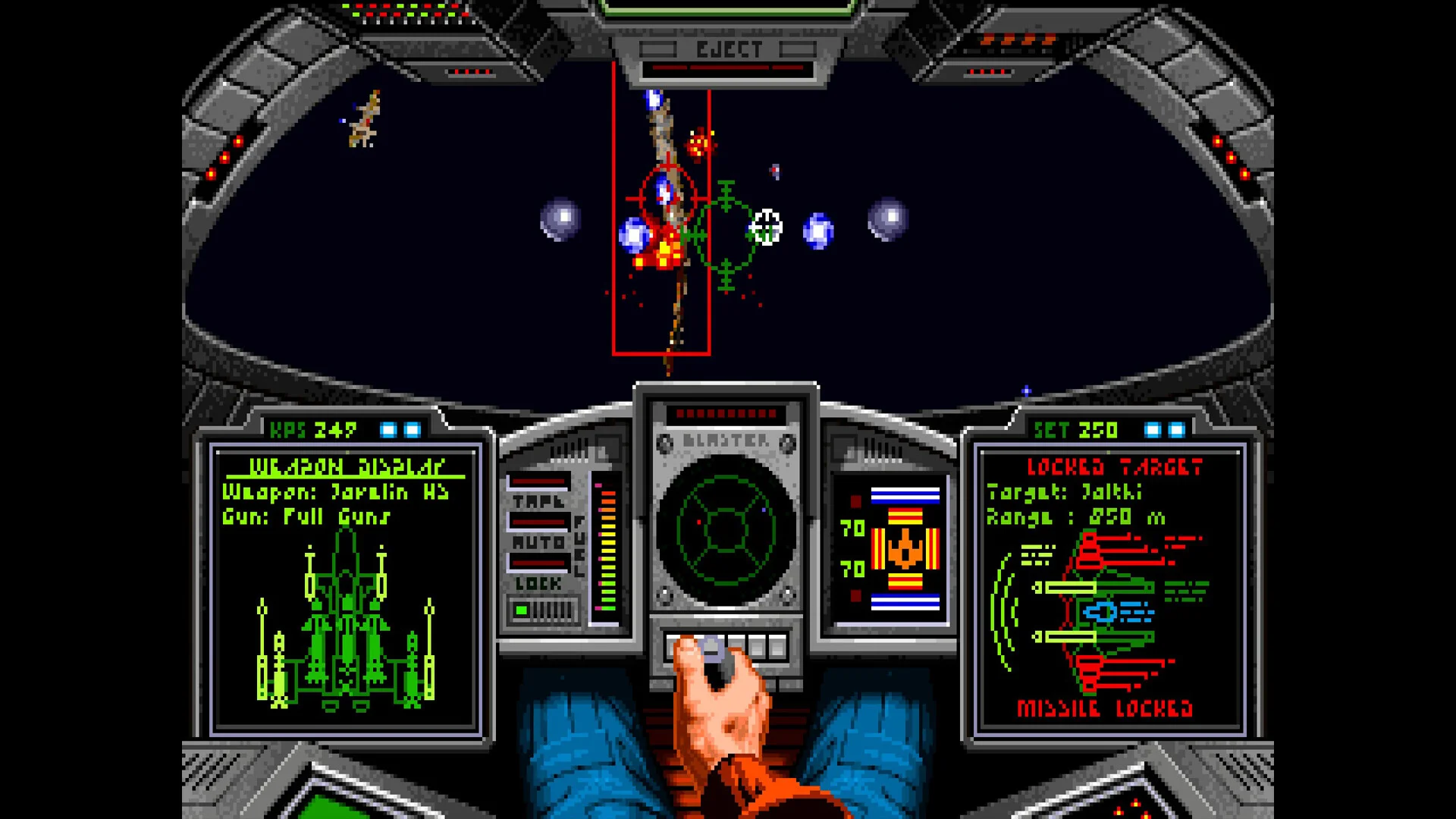
- Wing Commander 35th Anniversary Edition full story follows humanity’s war against the Kilrathi.
- The Confederation represents humanity’s military alliance and its struggle to survive.
- The Kilrathi are a powerful warrior civilization driven by honor, conquest, and fear.
- The recommended order begins with the original campaign and continues through the major numbered chapters.
- Branching decisions can change missions, relationships, and the tone of later campaign events.
Wing Commander 35th Anniversary Edition full story overview
The Wing Commander saga is a military science-fiction epic about humanity’s long war with the Kilrathi Empire. Rather than presenting a simple conflict between good and evil, the series focuses on duty, sacrifice, political pressure, and the personal cost of serving on the frontier.
The anniversary edition is best approached as a historical campaign experience. Its story is built around briefing rooms, carrier operations, fighter sorties, cinematic conversations, and decisions that connect individual missions to a much larger interstellar war.
Treat every briefing as part of the narrative. Mission objectives reveal the wider conflict, while conversations explain why each victory matters to the fleet.
The Confederation
Humanity’s military alliance. It protects settled worlds, supply routes, and carrier groups while trying to maintain unity under pressure.
The Kilrathi Empire
A powerful feline civilization built around hierarchy, martial tradition, loyalty, and conquest. Its commanders view war as both strategy and cultural destiny.
The Frontier
A dangerous region where isolated colonies, patrol ships, and civilian routes become immediate targets in the larger war.
The central player role is that of a combat pilot serving aboard a carrier. This perspective keeps the story personal. You may hear about entire fleets and collapsing fronts, but the immediate question is usually much smaller: Can your squadron protect the ship, escort the convoy, or hold the line long enough for reinforcements to arrive?
| Story element | Narrative function | What to watch for |
|---|---|---|
| Carrier | Home base and political center | Orders, rivalries, promotions, and crew morale |
| Briefing room | Mission context | Strategic goals and changing battlefield conditions |
| Fighter sortie | Personal action | Escort, patrol, interception, reconnaissance, or strike objectives |
| Debriefing | Consequence | Success, failure, losses, and future mission routes |
| Kilrathi encounter | Cultural contrast | Honor, intimidation, rivalry, and tactical escalation |
The story is also shaped by the tension between official orders and battlefield reality. A mission can be technically successful while still creating new risks, and a failed operation may expose information that changes the next stage of the campaign.
Recommended campaign order and historical context
For a clear understanding of the saga, follow the campaign chronology instead of treating each chapter as an isolated space-combat adventure. The exact contents of an anniversary package may differ, but the major narrative progression follows the growth of the Terran-Kilrathi conflict.
Begin with the earliest campaign available in your edition, then continue through the numbered sequels. This makes the escalation of technology, leadership, and wartime stakes easier to follow.
| Campaign stage | Main story purpose | Narrative change |
|---|---|---|
| Early conflict | Establishes the war and the pilot’s role | The player learns the military structure and major factions |
| Escalation | Expands the battlefield | Missions become more important to fleet-level operations |
| Personal rivalries | Introduces memorable enemy and squadron figures | Combat becomes tied to reputation and identity |
| Major offensive | Places critical systems at risk | Strategic objectives become more urgent |
| Late-war crisis | Tests the Confederation’s ability to survive | Sacrifice and political decisions take center stage |
A useful way to read the campaign is to separate its story into four layers:
- The personal layer: Your pilot’s career, squadron relationships, and survival.
- The operational layer: Carrier movements, reconnaissance, escorts, and strike missions.
- The strategic layer: Fleet defense, planetary campaigns, and major offensives.
- The cultural layer: The different values that shape Terran and Kilrathi decisions.
The earliest chapters establish the basic conflict: humanity is defending its territory against a technologically capable empire with a strong warrior culture. As the series progresses, the war becomes less predictable. Commanders must manage limited resources, unreliable intelligence, political expectations, and the possibility that a single defeat could affect an entire sector.
The anniversary presentation also highlights how the series used cinematic storytelling to make a space-combat campaign feel like a television drama. Characters do not exist only to issue objectives. They have rivalries, loyalties, fears, and opinions about how the war should be fought.
| Faction or group | Typical priority | Story significance |
|---|---|---|
| Terran pilots | Complete missions and protect the carrier | Represents the human cost of the war |
| Carrier command | Preserve the fleet and achieve strategic goals | Balances orders against battlefield losses |
| Intelligence officers | Gather information and identify threats | Turns reconnaissance into a major story tool |
| Kilrathi commanders | Win honor and defeat their enemies | Adds cultural and personal meaning to combat |
| Civilian populations | Survive attacks and displacement | Shows what military decisions endanger |
The best approach is to avoid rushing through the cutscenes. In this series, the transition between missions often contains as much important context as the mission itself.
Major characters, factions, and story roles
The Wing Commander narrative depends on its ensemble cast. The player may be the operational viewpoint, but the emotional direction of the campaign comes from commanders, squadron leaders, intelligence officers, and Kilrathi antagonists.
The following section discusses broad character functions and campaign themes. Avoid reading the later sections first if you want to experience major reversals without context.
| Character role | Typical responsibilities | Why the role matters |
|---|---|---|
| Player pilot | Flies combat missions and responds to orders | Connects the player directly to campaign outcomes |
| Carrier captain | Sets priorities and protects the ship | Represents command pressure and accountability |
| Veteran pilot | Advises, challenges, or trains newer pilots | Provides history and emotional contrast |
| Intelligence officer | Interprets enemy movements and reports | Links individual missions to strategic discoveries |
| Kilrathi rival | Tests the pilot’s skill and resolve | Turns the war into a personal contest |
The Terran side is not presented as a perfectly unified force. Officers may disagree over risk, secrecy, fleet movement, and the value of individual pilots. That disagreement gives the campaign much of its tension. A commander may prioritize the carrier, while a pilot argues that abandoning a damaged squadron is unacceptable.
The Kilrathi are similarly more complex than generic villains. Their society is shaped by rank, honor, family, military achievement, and the desire to prove strength. Some encounters are driven by tactical necessity, while others become personal tests between commanders.
Commanders
Make decisions under pressure and judge success by the survival of the fleet.
Squadron Leaders
Translate strategic orders into practical tactics and protect their pilots.
Veteran Pilots
Carry memories of earlier battles and often challenge reckless decisions.
Kilrathi Rivals
Give the conflict a personal face and force the player to adapt.
When reviewing dialogue, focus on three recurring questions:
- Is the character protecting the fleet, the squadron, or a personal reputation?
- Does the character value obedience more than initiative?
- Is the character treating the enemy as a military target, a cultural rival, or a personal threat?
These questions help explain why the story can shift tone between missions. One sortie may feel like a routine patrol, while the next becomes a turning point because a commander’s decision exposes a deeper conflict.
How mission choices affect the story
The campaign structure makes mission performance part of the narrative. Success is not limited to destroying enemy fighters. Protecting a transport, locating a target, surviving an ambush, or completing reconnaissance can determine what happens next.
Prioritize the stated objective before chasing additional kills. A high score cannot compensate for a failed escort, lost intelligence target, or destroyed mission-critical ship.
Read the briefing carefully
Identify the primary objective, protected ships, expected opposition, and any time-sensitive instructions. The briefing usually tells you what must survive.
Set a defensive priority
Protect carriers, transports, bombers, and reconnaissance craft before pursuing optional targets. Staying near the formation is often more valuable than extending a dogfight.
Complete the central objective
Destroy the assigned target, reach the patrol point, escort the convoy, or gather the required information. Do not assume that extra combat replaces the mission goal.
Review the debriefing
Check which ships survived, whether the objective was completed, and how command describes the outcome. These details provide clues about later campaign consequences.
Track the next assignment
Treat the following mission as a consequence rather than a disconnected level. Changes in opposition, location, and available support may reflect earlier performance.
| Mission type | Primary priority | Common mistake |
|---|---|---|
| Patrol | Reach and inspect assigned areas | Leaving the patrol route to chase distant enemies |
| Escort | Keep protected ships alive | Focusing on kills instead of incoming threats |
| Strike | Deliver weapons to the target | Engaging fighters before the strike group is safe |
| Reconnaissance | Gather or confirm information | Destroying targets that should be observed |
| Interception | Stop enemy forces before arrival | Allowing fast ships to bypass the main formation |
A practical rule is to divide enemies into three categories:
- Immediate threats: Attackers targeting your protected ships.
- Mission threats: Enemy craft capable of preventing the objective.
- Optional threats: Targets that can be engaged after the mission is secure.
This approach supports both the story and the combat system. It also fits the series’ military tone: the best pilot is not necessarily the one with the most kills, but the one who completes the assignment and brings the squadron home.
Story checklist and spoiler-aware completion route
Use this checklist to follow the narrative without losing track of important campaign details. It is designed for players who want to understand the full arc while still leaving room to discover individual scenes naturally.
Keep brief notes about major characters, recurring Kilrathi rivals, and mission outcomes. The story becomes easier to follow when you connect dialogue with the operational objectives that came before it.
Full Story Progress Checklist:
- Learn the Confederation and Kilrathi conflict before focusing on individual rivalries
- Read each carrier briefing and identify the primary mission objective
- Protect transports, bombers, and reconnaissance ships during escort operations
- Review every debriefing for campaign consequences and new strategic information
- Track recurring commanders, squadron leaders, and Kilrathi opponents
- Finish the available campaign chapters in chronological order
| Completion goal | Recommended approach | Story benefit |
|---|---|---|
| Understand the factions | Read early briefings and character dialogue | Establishes the political and cultural conflict |
| Follow the pilot’s career | Review promotions, assignments, and squadron changes | Shows how the player’s role develops |
| Recognize major turning points | Note changes in enemy tactics and mission scope | Connects battles to the wider war |
| Preserve campaign context | Avoid skipping debriefings | Explains why the next operation matters |
| Compare outcomes | Replay key missions when practical | Reveals how performance can alter progression |
For a first playthrough, avoid treating the campaign as a pure score attack. The strongest moments often come from the contrast between a successful mission and the losses surrounding it. A convoy may reach its destination, but the carrier may still lose experienced pilots. A strike may destroy an important target, but the political consequences may create a more dangerous assignment.
The full story is therefore best understood as a chain of military decisions. Every sortie contributes to the question at the center of the series: how much can the Confederation sacrifice before victory becomes impossible to recognize?
For historical reference, readers can compare the broader franchise chronology with the Wing Commander series overview and the Wing Commander III reference page, accessed November 8, 2026.
FAQ about the full story
The anniversary edition is best read as a campaign history: follow the conflict, track the characters, and treat mission outcomes as part of the narrative rather than isolated combat results.
Q: What is the main conflict in Wing Commander 35th Anniversary Edition full story?
The central conflict is the long war between the human Terran Confederation and the Kilrathi Empire. The story follows carrier-based pilots as they defend human territory, complete strategic missions, and confront increasingly dangerous enemy leaders.
Q: Who is the player supposed to represent?
The player represents a combat pilot serving aboard a carrier. The pilot is the story’s main viewpoint, but the campaign also depends on commanders, squadron leaders, intelligence officers, and recurring Kilrathi rivals.
Q: Do mission results matter to the story?
They can. Mission performance may influence the next assignment, the condition of the fleet, available support, and the tone of later briefings. Protecting mission-critical ships is usually more important than maximizing personal kills.
Q: What is the best order for experiencing the story?
Start with the earliest campaign included in your edition, then continue through the numbered chapters in release or chronological order. This preserves the escalation of the war and makes character relationships easier to understand.
The story remains effective because it combines large-scale military science fiction with a focused pilot’s perspective. You are not asked to control the entire war. You are asked to complete one assignment, protect the people around you, and live with the consequences when the battlefield changes.