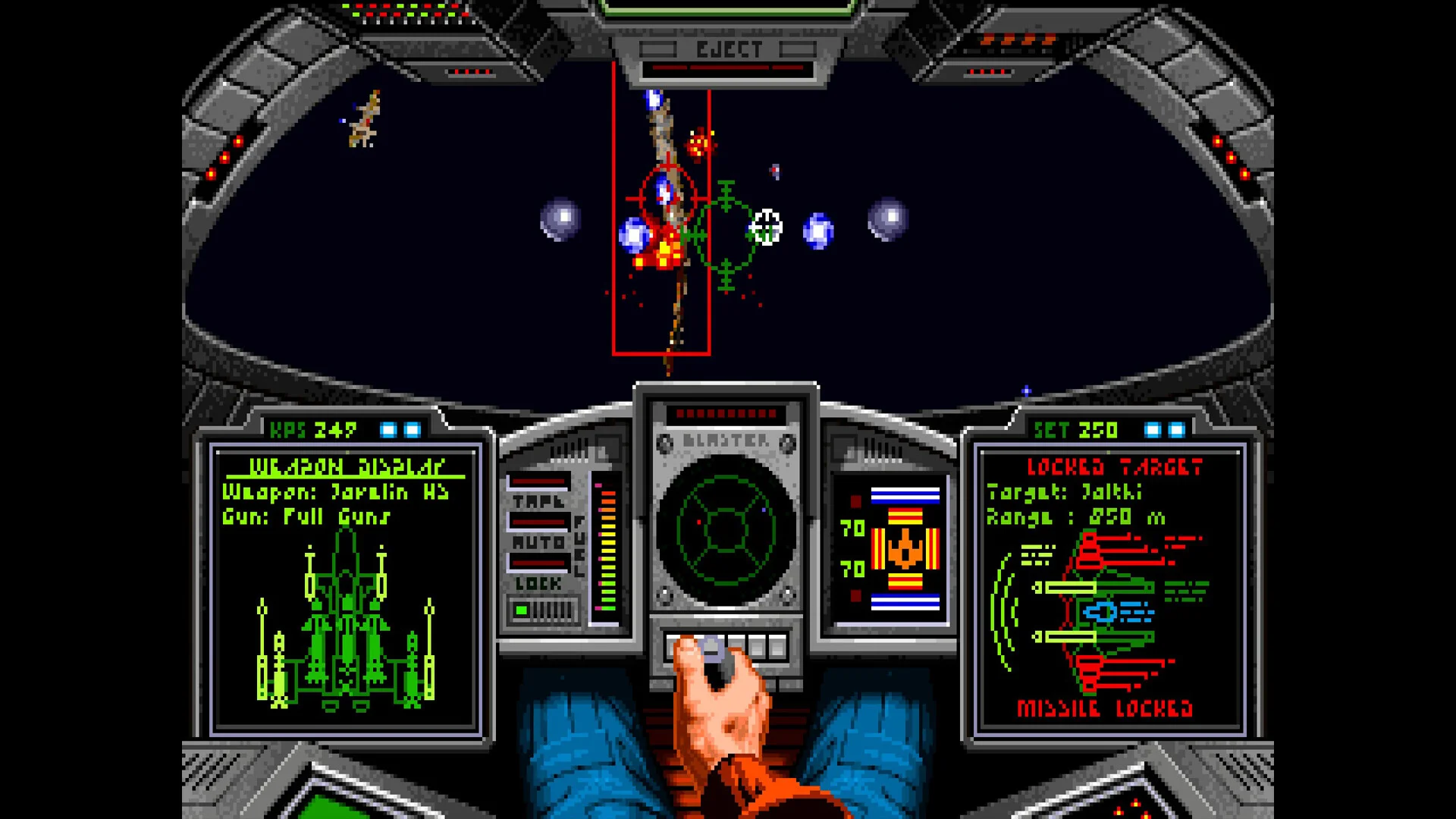
- Primary keyword: Wing Commander 35th Anniversary Edition keyboard controls vary by historical build and input profile.
- Best setup: Confirm the active DOS, WCAT, Kilrathi Saga, or WCDX configuration before changing bindings.
- Flight priority: Configure direction, throttle, afterburner, target cycling, and primary fire first.
- Combat tip: Keep guns, missiles, target selection, and lock commands easy to reach.
- Compatibility note: Modern controller and mouse mappings may depend on the launcher or platform layer.
Wing Commander 35th Anniversary Edition Keyboard Controls Overview
Wing Commander 35th Anniversary Edition keyboard controls are organized around flight, speed management, combat, targeting, views, and interface commands. The anniversary release combines several historical versions, so the exact default keys can differ between the DOS/WCAT and Kilrathi Saga/WCDX families. Treat the in-game or launcher profile as the authority for the active build rather than assuming that every keyboard command uses one universal layout.
The original design favors keyboard and joystick-style input. Modern PC releases may also expose mouse, controller, or Steam Input mappings. Before launching a difficult campaign mission, test each essential action in a simulator, early sortie, or safe menu environment.
| Control Group | Main Functions | Setup Priority | Practical Use |
|---|---|---|---|
| Flight | Pitch, yaw, roll | Highest | Position the fighter and stay aligned with targets |
| Speed | Throttle increase, throttle decrease, afterburner | High | Match formations, pursue enemies, or escape danger |
| Combat | Guns, missiles, weapon selection | High | Deliver damage without wasting limited ammunition |
| Targeting | Cycle target, select target, lock target | Highest | Identify friendlies and prepare missile attacks |
| Interface | Views, pause, menu, mission controls | Medium | Review the cockpit and manage the sortie |
Write down your preferred bindings before switching between historical builds. Separate profiles reduce confusion when DOS/WCAT and Kilrathi Saga/WCDX use different command layouts.
Flight Essentials
- Pitch, yaw, and roll
- Throttle adjustment
- Afterburner access
- Comfortable reach matters more than a copied layout
Combat Essentials
- Primary gun fire
- Missile launch
- Weapon selection
- Target confirmation before firing
Mission Essentials
- Target cycling
- View changes
- Pause or menu access
- Return and objective awareness
Keyboard Setup Step-by-Step
Use this sequence whenever you start a new installation, change the selected historical version, or move from keyboard input to a modern controller profile. The aim is to build a reliable control foundation before learning advanced combat techniques.
Identify the Active Version
Check whether the launcher is starting the DOS/WCAT build or the Kilrathi Saga/WCDX build. The anniversary package preserves multiple technical foundations, and commands should not be transferred between them without verification.
Configure Directional Flight
Assign or confirm pitch, yaw, and roll. Test each direction separately, then make small movements while watching the fighter respond. If the layout uses numeric-keypad flight controls, verify that the keyboard or operating system is recognizing those keys correctly.
Set Speed Controls
Confirm throttle increase, throttle decrease, and afterburner. Practice matching your wing formation before using afterburners for pursuit, escape, or rapid repositioning.
Add Combat and Target Commands
Bind primary fire, missile launch, target cycling, target selection, and target lock. Keep accidental missile launches unlikely, because missiles are limited and should be reserved for clear opportunities.
Test Interface Functions
Check view changes, pause, menu access, and any mission-related commands. Test these before deployment so that a menu or pause action does not interrupt a critical dogfight unexpectedly.
| Setup Test | What to Confirm | Failure Sign | Recommended Action |
|---|---|---|---|
| Direction test | Pitch, yaw, and roll respond separately | Fighter moves in the wrong direction | Recheck the active profile and axis assignment |
| Speed test | Throttle changes smoothly | Formation breaks or speed remains fixed | Rebind throttle increase and decrease |
| Afterburner test | Short speed burst activates correctly | No acceleration or unexpected activation | Check the mapped command and resource behavior |
| Target test | Contacts cycle and display correctly | Friendly and hostile ships are confused | Use the target display before firing |
| Weapon test | Guns and missiles use separate commands | Missile fires during routine attacks | Move missile launch to a deliberate key |
| Menu test | Pause and exit commands work | Mission cannot be paused or ended cleanly | Test the platform and game menu layers |
Do not publish or rely on a single universal key list for every build. The available bindings can change with the selected executable, compatibility layer, launcher configuration, or input profile.
Flight, Targeting, and Weapon Controls
A good keyboard layout lets you fly, identify threats, and fire without leaving the most important controls. Wing Commander missions often combine formation flying, patrol routes, escorts, and multi-ship engagements. The correct command is therefore the one that supports fast decisions while preserving awareness of objectives.
Flight Controls
Pitch, yaw, and roll control the fighter’s orientation. Use broad turns when approaching a waypoint and smaller corrections when lining up guns. Constant sharp inputs can make aiming less predictable, especially when using a heavier fighter.
Throttle control is equally important. Matching speed with a formation helps during escort and patrol missions, while reducing speed can create a better firing position. Afterburners are best reserved for pursuit, escape, and rapid repositioning instead of continuous use.
Target Selection
Cycle through contacts carefully. Confirm whether the selected craft is friendly, hostile, or neutral before firing. During a large furball, target cycling is often more important than immediately pressing the fire command.
| Action | Keyboard Role | Why It Matters | Common Mistake |
|---|---|---|---|
| Pitch | Directional flight input | Raises or lowers the nose | Overcorrecting during a gun pass |
| Yaw | Directional flight input | Adjusts horizontal alignment | Using yaw without managing speed |
| Roll | Directional flight input | Positions the fighter for turns | Losing formation during a roll |
| Throttle | Speed command pair | Controls approach and formation spacing | Staying at maximum speed constantly |
| Afterburner | Dedicated speed burst | Enables pursuit or emergency escape | Spending it before a difficult engagement |
| Cycle target | Target navigation command | Finds nearby contacts | Firing before confirming identity |
| Lock target | Target confirmation command | Supports missile use and tracking | Assuming every target is locked |
Weapons
Use guns for repeated attacks when the target is within range and aligned with the reticle. Missiles are limited, so launch them only after confirming the target and required lock condition. Short gun bursts can improve accuracy and conserve ammunition during longer sorties.
Keep target cycling, primary fire, and missile launch close enough for quick access, but separate gun and missile commands to prevent avoidable ammunition loss.
Before Launch Checklist:
- Test pitch, yaw, and roll in a safe area
- Confirm throttle increase, throttle decrease, and afterburner
- Cycle between friendly and hostile contacts
- Fire guns before testing missile launch
- Verify pause, view, and menu commands
Version Differences and Modern Input Profiles
The anniversary edition is designed to preserve multiple ways to experience the classic game. The DOS version retains its original presentation and control assumptions, while WCAT and WCDX provide compatibility-oriented paths for later systems. Kilrathi Saga offers a Windows-era alternative with its own behavior.
These differences affect more than graphics. Timing, audio, display handling, controller support, window behavior, and command availability may vary. Use the selected version’s profile as the starting point for any keyboard guide.
| Version Family | Input Focus | Display or Compatibility Notes | Best Starting Approach |
|---|---|---|---|
| DOS | Keyboard, joystick-style input | Closest to the original release environment | Test classic directional commands first |
| Kilrathi Saga | Windows-oriented keyboard and joystick setup | Later historical presentation | Confirm the Windows profile before missions |
| WCAT | Compatibility-focused keyboard and joystick configuration | Intended to improve modern execution | Use the packaged profile as the baseline |
| WCDX | Modern Windows-compatible input path | Convenient for contemporary desktop play | Start here when prioritizing ease of setup |
Modern controller support may be available through the platform or launcher. Steam lists partial controller support and Steam Deck compatibility, but the exact mapping can still depend on Steam Input, the active game build, and the chosen profile. Mouse flight controls may also require an enabled mouse profile rather than working as a universal default.
Keyboard
Best for preserving the classic control style and accessing many discrete commands.
Mouse
Useful when a supported profile exposes mouse movement or button functions, but not every build uses it identically.
Controller
Helpful for modern play when triggers, sticks, and face buttons are mapped carefully.
Steam Deck
Low hardware demands make handheld play practical, with extra attention needed for bindings and display scaling.
For current platform features, consult the official Steam store page and the EA product page. The Steam listing identifies partial controller support, Steam Cloud, and Steam Deck support.
Troubleshooting Keyboard Control Problems
Most keyboard issues come from using the wrong historical profile, assigning overlapping commands, or confusing game input with platform input. Fix one control group at a time instead of changing the entire layout during a mission.
If directional input is reversed or missing, confirm whether the game expects direct keyboard commands, numeric-keypad input, joystick mapping, or a compatibility-layer profile. If the game responds in menus but not during flight, the active sortie may be using a different input context.
For target problems, check the target display before changing weapon bindings. A target-cycle command can appear to fail when the selected contact is outside the expected range or when the profile is cycling through contacts differently than expected.
| Problem | Likely Cause | Fix |
|---|---|---|
| Flight keys do nothing | Wrong executable or inactive profile | Reopen the controls configuration for the selected version |
| Numeric keypad commands fail | Num Lock or keyboard recognition issue | Test Num Lock and use an alternate configured layout |
| Mouse does not steer | Mouse flight profile is disabled | Enable the supported mouse mapping or return to keyboard flight |
| Controller works in menus only | Platform mapping is incomplete | Review Steam Input or launcher controller assignments |
| Missiles fire accidentally | Shared or poorly placed weapon binding | Assign missile launch separately from primary fire |
| Target cycling feels inconsistent | Multiple contacts or version-specific behavior | Use the target display and verify the active build |
| Pause does not work | Game and platform menu layers differ | Test both the in-game and platform pause commands |
Change one binding at a time, test it in a low-risk situation, and keep a backup profile before experimenting with a different historical build.
Q: Are Wing Commander 35th Anniversary Edition keyboard controls identical in every version?
No. The anniversary release combines DOS, Kilrathi Saga, WCAT, and WCDX-related configurations. Defaults and available mappings can vary by executable, launcher, and compatibility layer.
Q: What should I configure first?
Start with pitch, yaw, roll, throttle, afterburner, target cycling, primary fire, missile launch, and pause. These commands cover the essential flight and combat loop.
Q: Can I use a mouse or modern controller?
Possibly. Mouse and controller behavior depends on the active profile and platform configuration. Steam lists partial controller support and Steam Deck support, but bindings may require adjustment.
Q: Why should missile launch have a separate key?
Missiles are limited weapons. A separate, deliberate command reduces accidental launches and gives you time to confirm the target and lock condition.