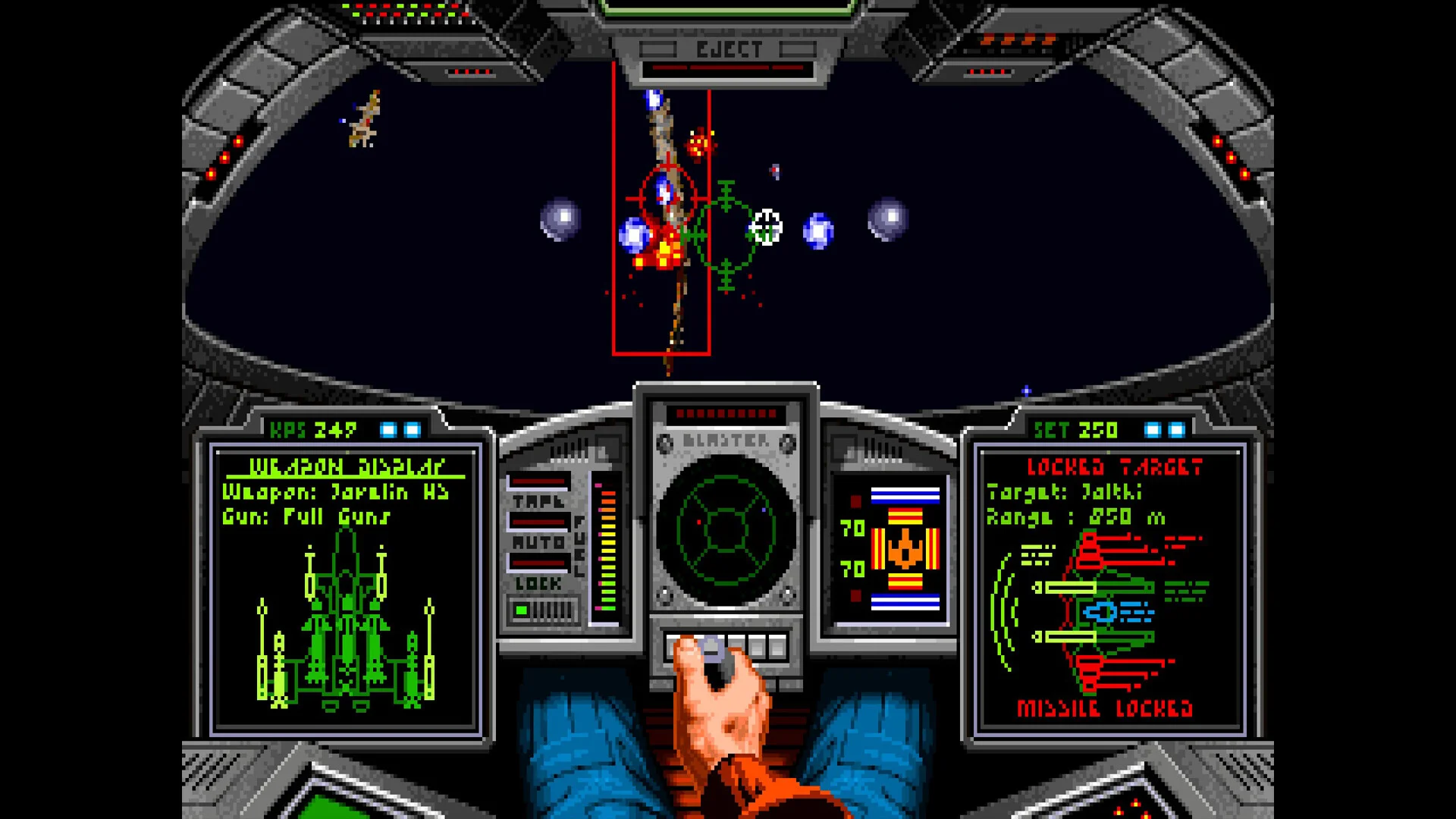
- Primary keyword: Wing Commander 35th Anniversary Edition story follows a mission-driven Terran-Kilrathi war campaign.
- Campaign structure: Mission performance can influence later assignments, routes, and available campaign outcomes.
- Main setting: The Tiger's Claw serves as the operational base for briefings, deployment, recovery, and progression.
- Extra content: Secret Missions 1 and 2 provide separate campaign experiences beyond the main story.
- Best approach: Read every briefing, protect mission-critical allies, and maintain separate saves before difficult sorties.
Wing Commander 35th Anniversary Edition Story Overview
The Wing Commander 35th Anniversary Edition story presents a military science-fiction campaign built around carrier operations, fighter sorties, and the continuing conflict between the Terran Confederation and the Kilrathi. Rather than telling its narrative through long standalone scenes, the game connects story development to mission briefings, combat objectives, pilot survival, and campaign results.
The Tiger's Claw acts as the central hub for the campaign. From the carrier, pilots receive assignments, review objectives, select fighters, coordinate with wingmen, and return after completing a sortie. This structure makes every mission part of a wider military operation instead of treating battles as isolated encounters.
Terran Confederation
The human military force coordinating carrier operations, fighter deployments, patrols, escorts, and defensive actions.
Kilrathi
The opposing power driving the central conflict through hostile encounters, strategic pressure, and escalating combat assignments.
Tiger's Claw
The carrier-based headquarters where briefings, fighter selection, campaign preparation, and mission recovery take place.
| Story Element | Function in the Campaign | What to Watch |
|---|---|---|
| Mission briefing | Establishes the immediate narrative and tactical objective | Read escort, patrol, strike, and defense instructions |
| Fighter selection | Connects the pilot to a combat role | Match speed, armor, and firepower to the assignment |
| Wingmen | Adds tactical and narrative context to each sortie | Protect formation members and follow mission orders |
| Mission result | Can influence campaign progression | Success and failure may lead to different routes |
| Carrier return | Completes the sortie loop | A successful dogfight still requires proper extraction or recovery |
Treat mission objectives as narrative information, not just gameplay tasks. Escorting a transport or preserving a wingman can matter to the campaign context even when enemy destruction is not the main goal.
Campaign Structure and Branching Routes
The campaign is organized around a sequence of assignments launched from the Tiger's Claw. Each briefing defines the immediate operation, while the results of earlier missions help shape what comes next. This means two playthroughs may not present exactly the same mission route.
Campaign branching gives the story a strong operational identity. A sortie can succeed tactically while still producing an unfavorable result if a protected ship is lost, a patrol objective is missed, or the pilot fails to return. Conversely, careful completion of the briefing's priorities can preserve a more favorable progression.
| Campaign Factor | Possible Effect | Recommended Response |
|---|---|---|
| Primary objective | Determines whether the sortie meets its central requirement | Confirm the objective before launch |
| Protected allies | Can affect mission success and later progression | Prioritize threats attacking transports or friendly fighters |
| Wingman survival | Supports formation strength and mission performance | Avoid unnecessary separation from the group |
| Pilot survival | Preserves the current campaign run | Withdraw when the objective is complete |
| Mission failure | May redirect the campaign or create a harder route | Keep a backup save before difficult assignments |
Read the carrier briefing
Review the mission type, assigned fighter, wingman formation, patrol route, and primary objective. Identify whether the sortie is an escort, patrol, strike, interception, or defensive operation.
Separate primary and secondary priorities
Determine which goals are essential for campaign progress and which actions are supportive. Destroying enemies is not always more important than protecting a transport or reaching a designated location.
Fly the assigned route
Stay with the formation when the mission requires an escort or patrol. Use speed control and afterburners to reposition without abandoning the operational area.
Complete the end condition
Confirm that the objective is complete, then follow the return instructions. Reach the recovery point or carrier instead of treating the last enemy kill as the end of the mission.
Save before major branches
Maintain separate saves before difficult assignments and important campaign transitions. This makes it easier to compare outcomes without overwriting a successful route.
Do not assume that every campaign uses one fixed mission order. Failure, incomplete objectives, or losses among important allies can change the route that follows.
Mission Flow and Combat Roles
The story is experienced through missions, so understanding the relationship between fighter roles and narrative objectives is essential. The four primary Terran starfighters each support a different style of operation, and the best choice depends on the assignment rather than a single universal ranking.
| Fighter | Strongest Role | Main Advantage | Main Tradeoff |
|---|---|---|---|
| Hornet | Interception | Fast and highly maneuverable | Light armor and lower firepower |
| Scimitar | Escort | Durable under sustained pressure | Slower in turning engagements |
| Rapier | General combat | Balanced speed, agility, and firepower | Less specialized than other fighters |
| Raptor | Heavy combat | Strong armor and weapon capacity | Slower and more deliberate to handle |
Hornet
Choose the Hornet for rapid interception and early engagements. Its speed helps establish position, but extended exchanges require careful maneuvering.
Scimitar
Use the Scimitar when escort durability matters. It can absorb pressure while protecting slower or vulnerable friendly units.
Rapier
The Rapier is a flexible choice for mixed assignments and one-on-one combat. Its balanced profile makes it a dependable general-purpose fighter.
Raptor
Select the Raptor for heavy combat, long-range engagements, and missions involving durable targets. Its firepower comes with reduced agility.
A reliable mission routine is straightforward:
- Read the briefing before launching.
- Match speed with the formation during patrol and escort operations.
- Confirm hostile targets before firing.
- Use guns for sustained attacks and reserve missiles for clear opportunities.
- Protect transports, carriers, and friendly pilots when they are part of the objective.
- Return to the Tiger's Claw after completing the mission requirements.
The story advances through successful operations, not simply through the number of enemy ships destroyed. Objective completion, protection duties, and safe extraction are equally important parts of the campaign.
Secret Missions and Story Extras
The Anniversary Edition preserves additional campaign material through Secret Missions 1 and Secret Missions 2. These expansions should be approached as separate story packages with their own briefings, mission sequences, and objectives rather than as ordinary steps in the main campaign route.
The edition also retains multiple historical builds, including DOS, Kilrathi Saga, WCAT, and WCDX versions. These builds preserve different technical presentations and control assumptions, but the central story remains connected to the same classic Terran-Kilrathi conflict.
| Content Group | Type | Best Use |
|---|---|---|
| Main campaign | Core playable story | Follow the primary carrier-based war narrative |
| Secret Missions 1 | Additional campaign | Explore extra operations outside the main route |
| Secret Missions 2 | Additional campaign | Continue with another dedicated mission sequence |
| Pilot's Manual | Historical reference | Learn background, controls, and campaign context |
| Reference cards | Quick reference | Review controls, ship information, and gameplay details |
| Ship blueprints | Archival material | Compare spacecraft and support the setting's technical flavor |
Story Exploration Checklist:
- Read every main campaign briefing before deployment
- Create separate saves before difficult or branching missions
- Complete the main campaign before comparing alternate routes
- Launch Secret Missions 1 as a separate campaign group
- Launch Secret Missions 2 with its own save organization
The preserved versions are useful for different reasons:
- DOS Version: Best for the original presentation, timing, and classic control assumptions.
- Kilrathi Saga Version: Suitable for players who prefer a later Windows-oriented historical build.
- WCAT Version: Useful when comparing compatibility-focused behavior and alternate configurations.
- WCDX Version: A practical modern starting point for players who want a convenient Windows setup.
For platform details, consult the official EA product page, the Steam store listing, and the GOG edition page.
Start with the main campaign, learn the mission structure, then play Secret Missions 1 and Secret Missions 2 as separate story groups. Keep independent saves if you plan to compare historical versions.
Story-Focused Strategy and FAQ
A strong story playthrough balances combat success with operational discipline. The safest approach is to treat each mission as a connected chapter: prepare from the briefing, preserve important allies, complete the required route, and recover before unnecessary risks create a failure.
| Situation | Priority | Practical Choice |
|---|---|---|
| Escort mission | Protect the assigned group | Stay near transports and intercept attackers |
| Patrol mission | Follow the route | Avoid drifting too far from designated areas |
| Strike mission | Reach and attack the target | Use heavy firepower when the objective permits |
| Defensive mission | Preserve friendly assets | Engage threats attacking protected ships |
| Difficult sortie | Secure campaign continuity | Save beforehand and withdraw after completion |
Q: What is the Wing Commander 35th Anniversary Edition story about?
It follows a carrier-based Terran-Kilrathi war campaign told through briefings, fighter sorties, wingman assignments, mission objectives, and changing campaign outcomes.
Q: Does the campaign have branching missions?
Yes. Mission performance, objective completion, pilot survival, and protection of important allies can influence later assignments and campaign routes.
Q: How should I play Secret Missions 1 and Secret Missions 2?
Treat both as separate campaign groups with their own briefings and mission sequences. Use separate saves if you want to preserve the main campaign route.
Q: Which fighter is best for the story campaign?
There is no single best fighter for every mission. The Hornet favors interception, the Scimitar favors escort durability, the Rapier offers balance, and the Raptor excels in heavy combat.
Read the briefing, protect the mission's important assets, and return safely after completing the objective. A disciplined pilot sees more of the campaign than one who chases every enemy into unnecessary danger.