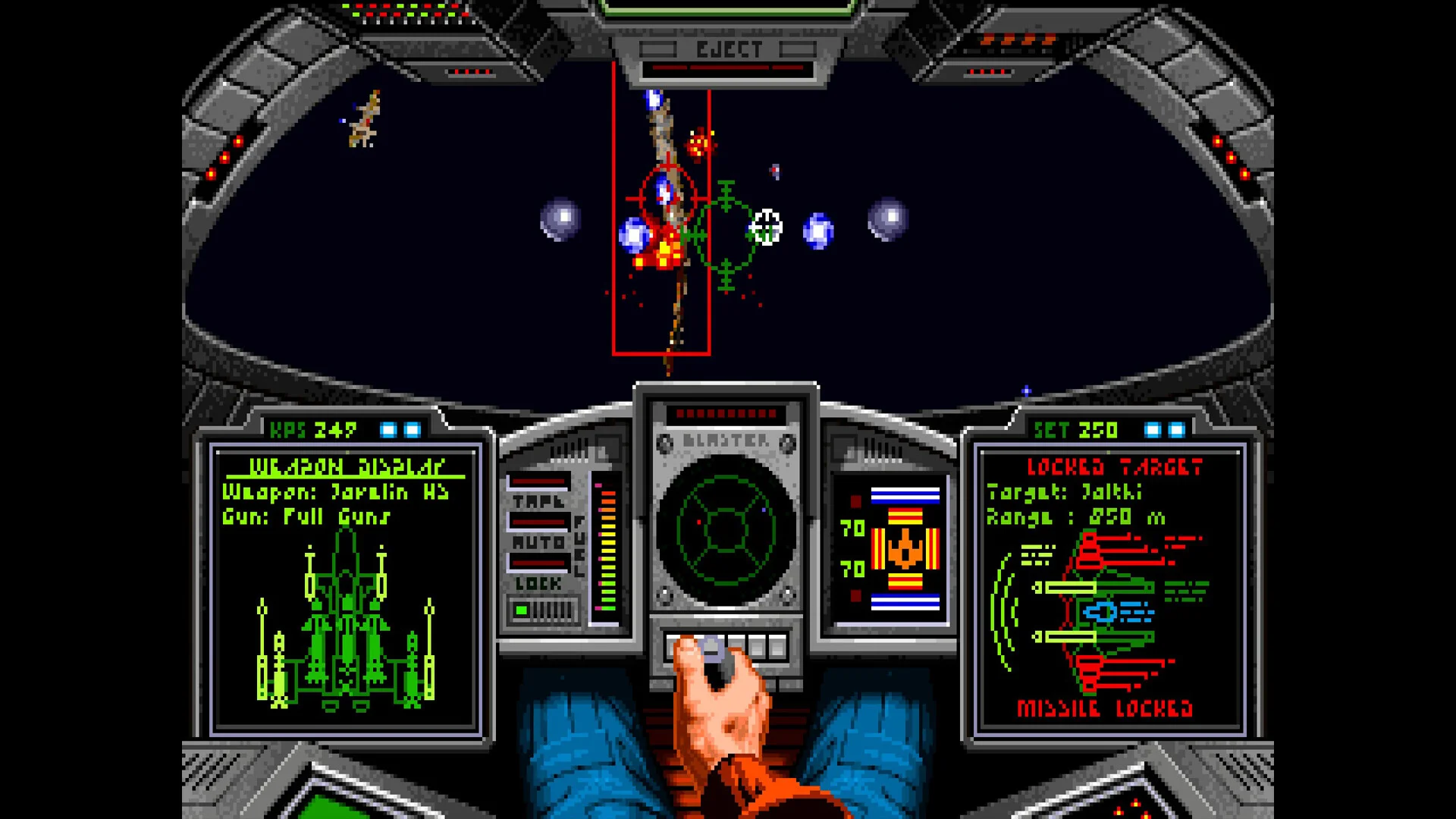
- Wing Commander 35th Anniversary Edition characters include pilots, officers, wingmen, and faction figures.
- Christopher Blair serves as the player-centered viewpoint throughout the main campaign.
- Maniac, Angel, Paladin, and Iceman represent different pilot personalities and combat relationships.
- Tolwyn and Shotglass connect individual missions to the wider Terran war effort.
- Character context helps explain briefings, wingman behavior, campaign pressure, and story progression.
Wing Commander 35th Anniversary Edition Characters at a Glance
Wing Commander 35th Anniversary Edition characters are best understood by role rather than by a traditional party system. The campaign places you inside a military chain of command, where pilots, officers, support crew, and enemies each shape the tone of a sortie. Some characters fly beside you, some deliver orders, and others define the conflict without appearing as conventional squad members.
The anniversary release preserves the classic campaign structure and its historical presentation options. That means character scenes remain closely connected to mission briefings, carrier life, wingman assignments, and campaign performance. The most useful way to read the roster is to separate direct companions from command figures and opposing personalities.
Player Perspective
Christopher Blair is the player-centered pilot. His identity develops through mission performance, squadron relationships, and the route taken through the campaign.
Wingmen and Rivals
Pilots such as Maniac, Angel, Paladin, and Iceman give the squadron its personality and create contrast between discipline, aggression, experience, and duty.
Command and Support
Tolwyn and Shotglass connect the cockpit to the larger war, providing authority, context, briefings, and a sense of life aboard the Tiger's Claw.
| Character group | Main function | What to watch for |
|---|---|---|
| Player pilot | Provides the campaign viewpoint | Mission results and survival shape the experience |
| Squadron pilots | Add rivalry, loyalty, and tactical personality | Dialogue and wingman assignments reinforce their roles |
| Command staff | Establish orders and strategic stakes | Briefings explain why each sortie matters |
| Support crew | Connects missions to carrier life | Conversations make the campaign feel continuous |
| Kilrathi figures | Represent the opposing war effort | Their presence frames the conflict beyond individual dogfights |
Treat the cast as part of the campaign structure. A character’s importance is not measured only by combat ability; briefings, rivalries, and mission consequences also define the role.
Terran Pilot Characters and Squadron Roles
The Terran pilots form the emotional center of the campaign. They are not interchangeable companions. Each one communicates a different approach to military service, risk, loyalty, or combat. Understanding these differences makes mission dialogue easier to follow and helps explain why squadron scenes feel more personal than a simple sequence of battles.
Christopher Blair
Christopher Blair is the player character and the most flexible figure in the roster. His personality is partly shaped by the player’s actions, while the surrounding cast supplies the stronger fixed viewpoints. Blair’s role is to enter the squadron, learn its expectations, and gradually become part of the Terran war effort.
Because Blair is player-controlled, his narrative identity is tied to practical decisions:
- Reading briefings before each sortie.
- Following escort, patrol, or strike objectives.
- Protecting friendly pilots and key ships.
- Returning safely after completing the assigned task.
- Managing separate saves before difficult campaign routes.
The character works best as a viewpoint for the player rather than as a heavily scripted personality. His progress is shown through growing responsibility and changing relationships with the squadron.
Todd Marshall “Maniac”
Maniac is the squadron’s aggressive and competitive personality. His name reflects a high-risk attitude that contrasts with more cautious or disciplined pilots. He is useful as a character benchmark: when Maniac favors speed, pressure, or personal achievement, the campaign shows how individual ambition can compete with formation discipline.
Maniac’s role is especially important when considering mission behavior:
- Aggressive pilots can make combat feel more urgent.
- Rivalry adds tension to otherwise routine sorties.
- A strong personality can challenge the player’s tactical habits.
- Combat confidence does not remove the need to complete objectives.
- The character helps distinguish personal glory from squadron success.
Angel
Angel represents professionalism, composure, and experienced military judgment. Her presence gives the squadron a steadier counterpoint to Maniac’s impulsiveness. She is also important to the campaign’s human side because she connects combat decisions with trust, responsibility, and the cost of failure.
When reading Angel’s role, focus on her function as a stabilizing figure:
- She reinforces disciplined flying.
- She helps balance emotional and tactical scenes.
- Her perspective makes the squadron feel more experienced.
- She represents competence without reducing the war to simple heroics.
Paladin
Paladin adds veteran experience and cultural depth to the Terran side of the conflict. His role is not limited to flying. He also helps give the campaign a broader historical and personal tone, reminding the player that the war has affected people across generations and backgrounds.
Paladin is most useful to track through:
- His veteran perspective.
- His relationship to squadron tradition.
- His ability to make the conflict feel larger than one carrier.
- His contrast with newer or less experienced pilots.
Iceman
Iceman represents precision, control, and a highly focused combat mindset. Compared with more openly emotional or competitive pilots, he contributes a colder and more technical presence. This contrast helps the squadron feel like a collection of distinct personalities rather than a single generic military unit.
| Character | Core personality | Narrative function | Player takeaway |
|---|---|---|---|
| Christopher Blair | Adaptable, player-defined | Viewpoint for the campaign | Mission results shape his progression |
| Maniac | Competitive, aggressive | Creates rivalry and pressure | Risk-taking is not the same as objective success |
| Angel | Professional, composed | Stabilizes squadron relationships | Discipline supports survival and trust |
| Paladin | Veteran, reflective | Adds history and perspective | The war has consequences beyond one sortie |
| Iceman | Focused, precise | Represents technical combat excellence | Accuracy and control matter under pressure |
Keep separate saves before major missions, then compare how briefings, wingman assignments, and campaign routes change after different mission outcomes.
Command Staff, Support Crew, and Kilrathi Characters
The campaign’s character writing depends on more than pilots. Commanders and carrier personnel establish the structure that makes each sortie meaningful. Opposing Kilrathi figures provide the conflict’s larger identity, even when the player encounters them primarily through missions, briefings, or war context.
Admiral Tolwyn
Tolwyn represents command authority and strategic responsibility. His role is to connect the immediate danger of a fighter engagement with the larger Terran campaign. Orders delivered through command are rarely only personal requests; they usually serve a defensive, escort, patrol, or offensive purpose.
When following Tolwyn’s role, pay attention to:
- The strategic reason behind each mission.
- The difference between primary and secondary objectives.
- The importance of protecting assets rather than chasing every enemy.
- How individual sorties contribute to the carrier’s campaign route.
Tolwyn’s presence also reinforces the military structure of the game. The player is not operating as an independent space hero. Blair is part of a chain of command, and success means completing the assigned operation as well as winning the dogfight.
Shotglass
Shotglass helps establish the Tiger’s Claw as a living military environment. His role is more personal and conversational than Tolwyn’s, making him an important bridge between formal briefings and the everyday experience of pilots. Through this type of support character, the campaign gains continuity between sorties.
Shotglass is useful for understanding:
- The carrier as a home base.
- The importance of pilot morale.
- The difference between official orders and squadron conversation.
- How the game transitions from preparation to deployment.
Kilrathi Characters and the Enemy Perspective
The Kilrathi are the opposing civilization and military force in the campaign. Their role should be read at two levels. At the mission level, Kilrathi ships are immediate combat threats. At the story level, the Kilrathi represent an organized enemy with its own identity, priorities, and war effort.
Avoid reducing every Kilrathi presence to a simple target. The broader conflict is more effective when the player recognizes:
- Kilrathi forces operate through coordinated military objectives.
- Enemy encounters support the campaign’s larger war narrative.
- Different enemy formations create different tactical pressures.
- The conflict is framed through both Terran survival and Kilrathi opposition.
| Character or group | Side | Role in the story | How to interpret the role |
|---|---|---|---|
| Admiral Tolwyn | Terran | Strategic command | Connects missions to the wider war |
| Shotglass | Terran | Carrier support and continuity | Makes the Tiger’s Claw feel like a home base |
| Terran squadron | Terran | Front-line combat unit | Provides relationships, rivalry, and cooperation |
| Kilrathi command | Kilrathi | Opposing military structure | Expands the conflict beyond individual enemies |
| Kilrathi pilots | Kilrathi | Immediate combat opposition | Test positioning, targeting, and mission discipline |
Destroying enemy fighters is not always the only victory condition. Escort survival, patrol completion, extraction, and carrier recovery can matter just as much as combat totals.
Step-by-Step Character Campaign Guide
Character development in the anniversary edition is closely tied to how you handle missions. Follow this sequence to keep the narrative relationships clear while avoiding common campaign mistakes.
Read the briefing before choosing your approach
Identify the primary objective, escort responsibilities, patrol area, assigned fighter, and wingman formation. The briefing establishes which characters and assets require protection.
Match your behavior to the mission role
Stay with the formation during escort operations, prioritize threats near friendly ships, and avoid treating every sortie as a free-hunting dogfight. This keeps character relationships connected to the mission’s purpose.
Observe pilot contrast during combat
Maniac’s aggression, Angel’s professionalism, Paladin’s experience, and Iceman’s precision create different squadron viewpoints. Use these contrasts to understand the tone of each assignment.
Complete the objective before chasing extra kills
Confirm that patrol points, escorts, strikes, or defensive tasks are finished. A high combat total does not replace an incomplete primary objective.
Return to the Tiger’s Claw safely
Follow recovery instructions after the objective is complete. Landing or exiting correctly preserves the sortie and maintains a clean campaign record.
| Campaign phase | Character focus | Recommended action |
|---|---|---|
| Briefing | Tolwyn, Shotglass, command staff | Read objectives and understand the operation |
| Deployment | Blair and assigned wingmen | Maintain formation and confirm targets |
| Combat | Maniac, Angel, Paladin, Iceman | Use their contrasting roles as tactical reminders |
| Objective completion | Blair and friendly assets | Protect mission-critical ships and pilots |
| Recovery | Entire squadron | Return safely and preserve campaign progress |
Character Campaign Checklist:
- Read every mission briefing before launch
- Identify the assigned wingmen and protected objectives
- Keep separate saves before difficult campaign routes
- Prioritize mission completion over unnecessary kills
- Return safely to the Tiger's Claw after the objective
Use the campaign briefing and carrier scenes as your main reference points. Character importance is often communicated through context, not through a separate statistics screen.
Character Themes, Editions, and Reading Order
The anniversary package includes multiple historical approaches to the classic game, including Anniversary Edition and Legacy Edition content. The presentation may differ by selected build, but the character-focused reading order remains consistent.
Start with the main Terran squadron cast, then place command staff around them, and finally examine the Kilrathi as the opposing force. This order mirrors the player’s experience: personal assignment, squadron interaction, strategic briefing, and wider conflict.
For New Players
Begin with the main campaign and focus on Blair, the assigned wingmen, and the basic chain of command. Learn the mission structure before exploring alternate builds.
For Returning Players
Compare the Anniversary and Legacy presentations, then revisit the dialogue and carrier scenes that define the original squadron relationships.
For Lore Readers
Track how Terran command, squadron culture, and Kilrathi opposition work together to turn individual missions into a larger war narrative.
The official EA product page, Steam listing, and GOG edition page are useful for checking the included release options and platform-specific features. Character interpretation, however, is best supported by playing the campaign in mission order and reading each briefing before deployment.
The anniversary release is a preservation-focused package rather than a modern character reboot. Expect historical campaign structure, classic dialogue presentation, and differences tied to the selected version.
Frequently Asked Questions About the Characters
Q: Who is the main character in Wing Commander 35th Anniversary Edition?
Christopher Blair is the player-centered pilot. His story is shaped through mission performance, squadron relationships, campaign routes, and increasing responsibility within the Terran war effort.
Q: Which characters are the main Terran wingmen?
Maniac, Angel, Paladin, and Iceman are among the most recognizable squadron personalities. They represent different approaches to combat, discipline, experience, rivalry, and military duty.
Q: What is Admiral Tolwyn’s role?
Tolwyn represents strategic command. His role connects individual sorties to the wider Terran campaign and emphasizes that mission objectives matter beyond the number of enemy fighters destroyed.
Q: Are the Kilrathi only enemy targets?
The Kilrathi are the opposing military and civilization in the campaign. They function as immediate combat threats, but they also provide the wider political and military context for the Terran-Kilrathi conflict.
The strongest way to understand the cast is to connect every character to a campaign function: viewpoint, rivalry, mentorship, command, support, or opposition.